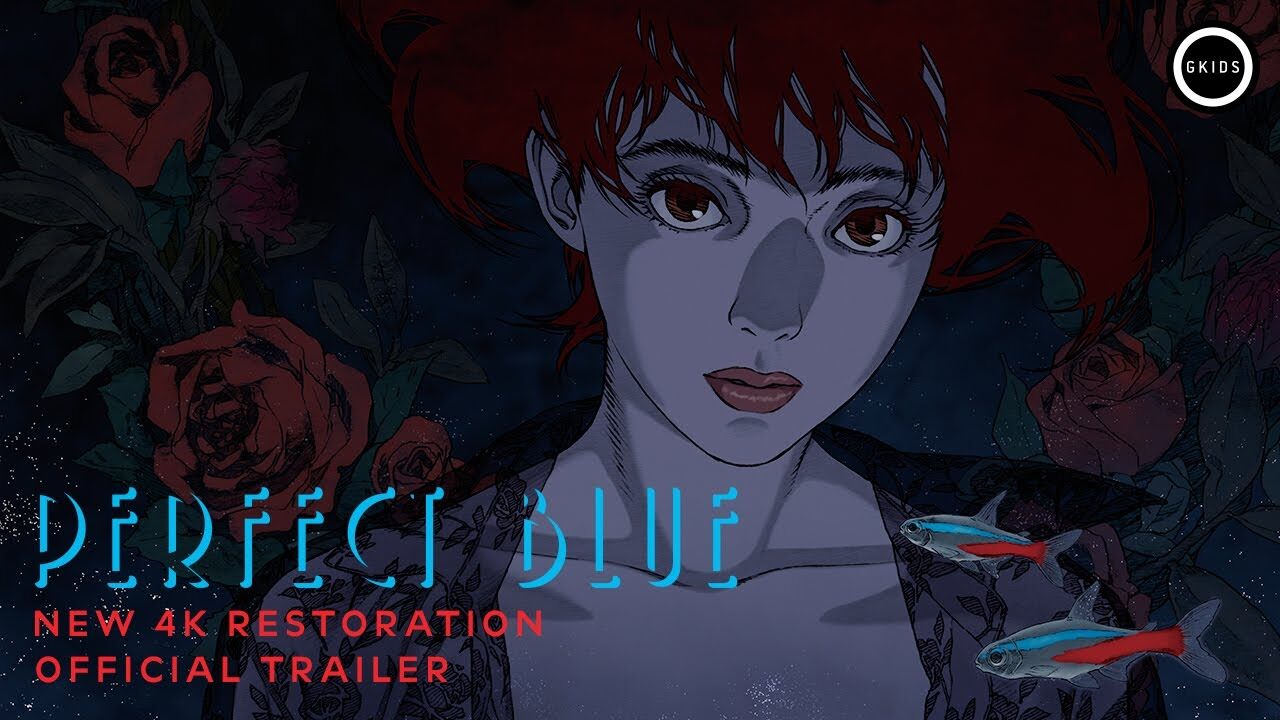
Perfect Blue
Satoshi Kon and Perfect Blue: How His Directorial Debut Redefined Psychological Anime
Satoshi Kon made his directorial debut with the 1997 psychological thriller Perfect Blue. Though adapted from Yoshikazu Takeuchi's novel, Kon drastically reshaped the story, pioneering his signature style of blurring the boundary between reality, memory, and delusion.
Who directed and created Perfect Blue?
Satoshi Kon as director
Satoshi Kon directed Perfect Blue as his feature film debut. Masao Maruyama, a producer at studio Madhouse, offered Kon the project in fall 1994 after admiring his work as writer and storyboard artist on episode 5 of the JoJo's Bizarre Adventure OVA. Kon had also served as a key animator on episode 2 of that same series. He accepted the job because he wanted the chance to direct an animated production.
Yoshikazu Takeuchi as original creator
The film adapts the novel Perfect Blue: Complete Metamorphosis (Perfect Blue: Kanzen Hentai) by Yoshikazu Takeuchi. Takeuchi created the idol protagonist, her obsessive stalker, and the core genre setting. Screenwriter Sadayuki Murai joined Kon to rebuild the scenario completely, discarding the original draft's slasher framework for a psychological breakdown.
Production origins: from live-action OVA to theatrical release
Shifting formats and tight budgets
Takeuchi originally planned Perfect Blue as a live-action feature film. Financing shortfalls forced the team to downgrade the concept to a direct-to-video production, and then to a direct-to-video anime (OVA). Kon took the assignment expecting a modest release for a small domestic audience. Studio heads then upgraded the title to a theatrical feature shortly before animation wrapped.
The festival breakout
Because Kon was an unknown first-time director, the film's distributors marketed him overseas as a disciple of Akira creator Katsuhiro Otomo. Otomo received a planning collaborator credit on promotional materials, having advised Takeuchi earlier regarding animation industry realities. The movie premiered at the Fantasia International Film Festival in Montreal on August 5, 1997. The screening proved popular enough that staff ran an emergency second screening, and attendees voted it best international film. That buzz produced invitations to more than 50 international film festivals across Australia, Germany, Sweden, and South Korea.
How Kon altered the original novel
The three rules from Takeuchi
Kon had not read the novel when hired. He only reviewed an early screenplay draft that tracked Takeuchi's book. Kon disliked slasher stories and pop idols, so the script's heavy bloodletting did not fit his style. Takeuchi granted permission to change the narrative entirely on three requirements:
- The lead character remains a B-grade idol.
- She faces an obsessive fan (stalker).
- The project remains a horror film.
Rebuilding the narrative
Kon teamed with screenwriter Sadayuki Murai to dump typical serial killer tropes like those seen in Seven or The Silence of the Lambs. Instead of tracking the criminal's mind, they followed the mental collapse of the target, perfect blue mima. Kon invented the television drama Double Bind as an explicit parody of contemporary Japanese television dramas that chased American film trends. In Double Bind, Mima plays Yoko Takakura, whose role expands dramatically after her agent secures screen time at the cost of filming an explicit strip club assault.
Core themes and artistic techniques
Blurring reality and illusion
Kon organized the script around dissolving barriers: dream and reality, memory and fact, and self versus others. He refined this setup from his writing on the 1995 Memories segment Magnetic Rose and his unfinished manga Opus. Susumu Hirasawa's electronic album Sim City helped inspire Kon's view of synthetic identities. Kon realized that a cyber persona could feel more real to outsiders than the physical person. External fan pressure and internal professional guilt cause this online phantom to materialize in Mima's head.
Visual misdirection
Kon avoided empty photorealism. He drew realistic backgrounds so that their sudden collapse into hallucinations would disorient viewers. The animation cuts between Mima's daily life, scripted lines on Double Bind, and subjective visions without clear visual markers. Professor Susan Napier noted that this technique turns the audience's perception unreliable from the first scene. Otaku culture critic descriptions also point out that the story serves as a critique of modern Japanese consumerism.
Satoshi Kon's creative background and influences
Mentors and collaborators
After graduating in graphic design from Musashino Art University in 1987, Kon worked as an assistant to Katsuhiro Otomo. He drew layouts for Mamoru Oshii's Patlabor 2: The Movie alongside artists Hiroyuki Okiura and Takeshi Honda, and later worked with Oshii on the manga Seraphim: Wings of 266,613,336 until editorial disagreements halted publication. Kon also absorbed structural techniques from live-action American films, which accounted for ninety percent of the movies he rented on home video during college.
Susumu Hirasawa's musical impact
Kon named musician Susumu Hirasawa as the single biggest influence on his style. Hirasawa's use of fractal programs in audio production prompted Kon to adopt fractal structural logic for film scenes. Hirasawa's lyrics also led Kon to study Jungian psychology and author Hayao Kawai. Hirasawa later scored Kon's Millennium Actress and Paprika, and his song Rotation (LOTUS-2) played at Kon's funeral following his death from pancreatic cancer on August 24, 2010.
Key figures and collaborators
| Person / Work | Role or Influence on Satoshi Kon |
|---|---|
| Yoshikazu Takeuchi | Wrote the original novel Perfect Blue: Complete Metamorphosis |
| Sadayuki Murai | Screenwriter who developed the psychological script with Kon |
| Masao Maruyama | Madhouse producer who recruited Kon after JoJo's Bizarre Adventure |
| Katsuhiro Otomo | Manga mentor, Akira creator, and planning collaborator |
| Susumu Hirasawa | Electronic composer whose music shaped Kon's thematic structures |
| Junko Iwao | Voice actress who played lead character Mima Kirigoe |
Voice cast and key characters
The vocal lineup
Madhouse hired Junko Iwao to voice protagonist Mima Kirigoe. Masaaki Okura played her stalker Me-Mania, while Shiho Niiyama voiced former idol manager Rumi Hidaka. The production also brought on Rica Matsumoto, Shinpachi Tsuji, and Emiko Furukawa in supporting Japanese audio parts. English home video releases featured dub performances from actors including Frank Buck, James Lyon, David Lucas, Carol Stanzione, Ty Webb, and Dari Mackenzie.
Mima's internal fracture
Mima begins as a clean-cut member of the pop trio CHAM! before quitting music for television. Her manager Rumi opposes the career pivot, while her talent agent Tadokoro pushes Mima into provocative roles to gain industry status. The psychological stress peaks when Mima finds the diary website Mima's Room. The site documents her daily routine down to which foot she uses to step off train cars, making her question who controls her identity.
Release history and critical reception
Release milestones
The movie opened in Japanese theaters on February 28, 1998, through Rex Entertainment. Anchor Bay Entertainment issued the movie on UMD for Sony PSP on December 6, 2005, containing only the English audio track in letterboxed widescreen. On December 10, 2007, the Sci Fi Channel aired the film in the United States during its Ani-Monday programming block. Shout! Factory and GKIDS partnered to release a North American Blu-ray on March 26, 2019. Anime Limited distributed a 4K restoration in the United Kingdom on October 10, 2025, while GKIDS brought that same 4K master to US theaters on October 3, 2025.
Reviews and awards
Perfect Blue won festival awards at Fantasia and Portugal's Fantasporto. Distributors collected written endorsements from Hollywood directors Roger Corman and Irvin Kershner without licensing fees, printing their praise across marketing flyers. On Rotten Tomatoes, the film has an 88% approval score from 59 critic reviews with an average score of 7.4/10. Metacritic assigns it a 67 across 17 outlets. Time selected it for its Top 5 Anime film list, Total Film placed it 25th among the greatest animated films, and /Film named it the scariest animated film ever made.
Spoiler warning: plot twists and thematic resolution
The climax of Double Bind and Rumi's reveal
Mima's mental stability deteriorates after shooting the rape scene for Double Bind and posing nude for photographer Murano. When Murano and screenwriter Shibuya are found stabbed to death, Mima finds bloodied clothes in her room and questions whether she committed the murders during a dissociative episode. Me-Mania traps Mima in the empty television studio after wrapping Double Bind, attempting to kill her under orders sent to him by an internet sender claiming to be the real Mima. Mima bashes his skull with a claw hammer to survive.
The chase through Tokyo
Rumi takes the wounded Mima back to an apartment that mimics Mima's original home layout. Mima spots living fish inside the tank and realizes Rumi created the site Mima's Room, manipulated Me-Mania, and carried out the killings. Rumi's schizophrenia has caused her to believe that she is CHAM!'s true pop star. During the ensuing foot chase through the street, Mima rips away Rumi's idol wig. Rumi impales her torso on a shattered window pane, mistakes approaching truck headlights for idol stage lights, and strikes a performance pose. Mima dives to pull Rumi out of the vehicle's path. Later, Mima visits an institutionalized Rumi before leaving as an established actress, telling her reflection in the car mirror that she is the real thing.
FAQ
Was Perfect Blue the first movie Satoshi Kon directed?
Yes, Perfect Blue was Satoshi Kon's directorial debut. Prior to its 1997 premiere, he worked as a manga artist, animator, layout artist, and screenwriter.
Is Perfect Blue based on a book?
It is loosely based on the novel Perfect Blue: Complete Metamorphosis by Yoshikazu Takeuchi. Kon retained only three core elements from the book: the pop idol protagonist, the stalker, and the horror framework.
Where can you stream Perfect Blue officially?
In the United States, official streaming options have included platforms like Crunchyroll and Max. GKIDS also handles North American home video and theatrical re-releases.
Sources
Official sites & news
- Perfect Blue on Crunchyroll
- Perfect Blue - Wikipedia
- Satoshi Kon - Wikipedia
- Satoshi Kon: The Illusionist - Wikipedia
Reference
Blogs & fan discussion
Statements backed only by blogs or fan discussion are written as what fans say, not as fact.