Perfect Blue
Perfect Blue: The Definitive Guide to Satoshi Kon's Masterpiece
Perfect Blue (1997) is an 81-minute psychological horror anime film directed by Satoshi Kon and produced by Madhouse. It follows pop idol Mima Kirigoe, who leaves her group to act as an obsessed stalker shadows her and gruesome murders break out.
Plot overview and synopsis
Leaving CHAM! for acting
Mima Kirigoe is a member of CHAM!, a modestly successful Japanese pop idol trio. Under pressure from her agency's president, Tadokoro, Mima announces her graduation from music to transition into a career as a screen actress. Her protective former-idol manager, Rumi Hidaka, vocalizes fierce resistance because she fears how the entertainment industry treats young starlets.
Traumatic roles and backlash
Mima secures a guest part on Double Bind, an edgy crime procedural drama. Her role begins as a single line, but the drama's producer and screenwriter push her to accept a traumatic strip club sexual assault scene to raise her profile. Desperate to validate her agency's gamble and shed her wholesome past, Mima complies. She then poses for an explicit art photography book shot by photographer Murano.
Stalking and "Mima's Room"
Her shift unleashes intense backlash. Mima discovers "Mima's Room," a personal webpage chronicling her intimate daily routine with frightening precision, authored by someone claiming to be the "true" Mima. Soon, a disfigured, fixated stalker known as "Me-Mania" (Mamoru Uchida) begins tailing her every move.
Murders and hallucinations
Screenwriter Takao Shibuya and photographer Murano are brutally slaughtered by an assailant wielding an awl, shattering Mima's grip on reality. She suffers vivid hallucinations of a sparkling, airborne "Idol Mima" mocking her moral corruption. The real-world murders leave Mima and the audience unsure if the killer is her stalker, her own split personality, or someone else entirely.
Key characters and voice cast
The voice production was handled by veteran Japanese voice actors, with sound director Masafumi Mima overseeing the sound design. In North America, Animaze produced the English dub under directors Kevin Seymour and Lia Sargent.
Main cast: Mima, Rumi, and Uchida
| Character & Role | Japanese Voice Actor | English Dub Voice Actor |
|---|---|---|
| Mima Kirigoe<br>Retiring idol turned aspiring dramatic actress | Junko Iwao | Bridget Hoffman (as Ruby Marlowe) |
| Rumi Hidaka<br>Mima's personal manager and a former idol | Rica Matsumoto | Wendee Lee |
| Mamoru Uchida (Me-Mania)<br>Obsessive stalker and security guard | Masaaki Okura | Bob Marx |
Main cast: Tadokoro and Eri Ochiai
| Character & Role | Japanese Voice Actor | English Dub Voice Actor |
|---|---|---|
| Tadokoro<br>President of Mima's talent agency | Shinpachi Tsuji | Barry Stigler |
| Eri Ochiai<br>Lead co-star on Double Bind | Emi Shinohara | Lia Sargent |
Supporting cast
| Character & Role | Japanese Voice Actor | English Dub Voice Actor |
|---|---|---|
| Takao Shibuya<br>Screenwriter for Double Bind | Yoku Shioya | Steve Apostolina |
| Murano<br>Photographer who shoots Mima's photo book | Masashi Ebara | Jamieson Price |
| Kenichi Sakuragi<br>Co-star actor in Double Bind | Hideyuki Hori | Sparky Thornton |
| Rei & Yukiko<br>Remaining members of idol group CHAM! | Shiho Niiyama & Emiko Furukawa | Mary Elizabeth McGlynn & Dyanne DiRosario |
Junko Iwao's background
Lead Japanese actress Junko Iwao brought personal authenticity to the part, having previously performed as an idol singer in the group Saint Four (under the stage name Jun Iwao) before transitioning to voice acting.
Production history: how a low-budget OVA became a theatrical cult classic
Origins as a direct-to-video OVA
In his published production memoirs, Perfect Blue Senki (serialized on his official website KON'S TONE and included in his book KON'S TONE: The Road to Millennium Actress), Satoshi Kon revealed that Perfect Blue was originally commissioned as a 70-minute direct-to-video Original Video Animation (OVA). Madhouse was allotted a budget of roughly 90 million yen (roughly $830,000 USD at the time), excluding sound production costs.
Kon's overhaul and conditions
When the project was brought to Kon as his first feature directing opportunity, he found the proposed rough draft ill-suited to his tastes. It was written as a straightforward action-horror slasher about a deranged fan chasing an idol. Kon agreed to direct only on the condition that he and screenwriter Sadayuki Murai had total creative freedom to overhaul the scenario, keeping just three foundation stones from the original project:
- The protagonist is a pop idol.
- She is being stalked.
- The identity of the behind-the-scenes culprit.
Creative influences and "Mima's Room"
Kon completely transformed the narrative into a puzzle box of identity dissociation and perceptual deception. He cited Japanese electronic musician Susumu Hirasawa's 1995 album Sim City as the primary inspiration for merging subjective fantasy and physical reality. The website "Mima's Room" came from Kon's own life. He had just bought his first personal computer and was teaching himself to navigate early dial-up connections, directly modeling Mima's clumsy computer literacy on his own.
Theatrical upgrade
According to Japanese Wikipedia, distributor Rex Entertainment decided to upgrade the project to a theatrical release shortly before its completion.
The novel vs. the film: complete metamorphosis
Origins and the title's meaning
The movie is officially credited as an adaptation of Yoshikazu Takeuchi's 1991 novel Perfect Blue: Complete Metamorphosis (Kanzen Hentai). In Japanese, kanzen hentai (完全変態) is a biological term meaning complete metamorphosis (as when a caterpillar transforms into a butterfly), but carries an intentional, sinister double meaning pointing to sexual perversion (hentai).
Cultural backdrop and stalking
Takeuchi conceived the novel in the shadow of the late-1980s Miyazaki Tsutomu murders, a tragedy that led the Japanese press and public to harshly scapegoat anime, horror fiction, and otaku subculture. Takeuchi, who was a popular radio host on Psychic Seinen-dan, wanted to explore the then-emerging crime of stalking years before Japan enacted its Anti-Stalker Regulation Law in 2000.
Narrative and design differences
Key differences between the original book and Kon's film include:
- Linear vs. subjective: Takeuchi's novel is a direct, external psycho-thriller about an idol besieged by an unhinged stalker, featuring high body counts and graphic action. Kon and Murai discarded the linear slasher tropes, making the central conflict internal and psychological.
- Character designs: Takeuchi personally requested manga artist Hisashi Eguchi to draft original character concepts. Animation director Hideki Hamasu and Kon then adapted Eguchi's designs for realistic animation movement.
Novel availability and 2024 reissue
Takeuchi's original novel remained out of print for decades, leading Japanese readers to confuse it with Miyuki Miyabe's unrelated detective mystery of the same name (Perfect Blue). In 2024, the novel was republished in Japan by independent publisher Kojinsha with revisions by Takeuchi, as reported by Japanese culture outlet KAI-YOU.
Ending explained: the truth behind the murders (spoilers)
Who was the killer?
The mastermind behind the killings was Mima's manager, Rumi Hidaka. Rumi was once an unsuccessful pop idol whose career collapsed early, leading her to live vicariously through Mima.
When Mima was pushed into mature acting roles, nudity, and provocative shoots, Rumi experienced a complete psychotic break. Unable to accept the "desecration" of her pure idol fantasy, Rumi's mind split: she convinced herself that she was the real Mima and created the "Mima's Room" website to author Mima's daily life.
Rumi's manipulation and murders
Rumi groomed the stalker Mamoru Uchida ("Me-Mania") by sending him forged emails as "Idol Mima," convincing him that the actress Mima was an imposter who had to be eradicated. Rumi personally murdered screenwriter Shibuya and photographer Murano with an awl to eliminate anyone complicit in altering Mima's image.
The climax in Rumi's apartment
When Uchida attempts to assault and murder Mima on the Double Bind studio set, Mima kills him in self-defense. Rumi brings Mima back to what Mima believes is her apartment, only for Mima to realize the room is a fabricated shrine decorated with CHAM! posters: it is Rumi's home. A deranged Rumi steps out dressed in Mima's vintage pink CHAM! stage costume, carrying an awl and seeing her own reflection in glass as the youthful pop idol.
Street pursuit and resolution
After a harrowing pursuit through the city streets, a vehicle's headlights shatter Rumi's mirror delusion, and a stray shard impales Rumi. Mima shields Rumi from oncoming traffic, keeping Rumi alive and separating her real self from the cycle of exploitation.
Hospital visit and final line
Months later, Mima visits a quiet psychiatric facility where Rumi remains institutionalized, peacefully trapped in her delusion that she is still a youthful pop idol performing for fans. Mima leaves the hospital as a confident, sought-after actress. In the final seconds, sitting in her car, she adjusts the rearview mirror, looks directly into the glass with a subtle smile, and whispers:
> "I'm the real one." (「私は本物だよ」 - Watashi wa honmono da yo)
Japanese fan discussions and cultural context
On Japanese message boards like 5ch, Filmarks, and cinematic blogs, Perfect Blue is analyzed far beyond simple plot mechanics.
The "I'm the real one" debate
Discussions on 5ch and Filmarks have long debated the precise inflection of Mima's closing line. In his official storyboard notes and interviews, Satoshi Kon explained that Mima's arc models three steps of personal maturation: Destruction (破壊) → Chaos (混沌) → Construction (建設). Mima begins as a passive, obedient child reliant on external approval, undergoes violent identity breakdown in the chaos phase, and ultimately reconstructs an autonomous adult self.
Symbolism of the rearview mirror
Kon explicitly noted that framing her final line inside the car's rearview mirror (ルームミラー) was intentional: human beings cannot gaze upon their own faces except through reflections or the eyes of others, meaning no immutable, permanent "true self" exists. Her line expresses momentary stability before life's next challenges.
Voice actress theory
On 5ch and fan forums, one theory holds that Rica Matsumoto (Rumi's voice actress) voiced the final line to suggest Rumi took over Mima. Official credits list Junko Iwao, who delivered the dialogue in Mima's natural speaking voice to distinguish it from her idol persona.
Prescience in the SNS and VTuber era
In the late 1990s, when personal homepages were a novelty, Kon identified how digital personas detach from physical human beings. Commentary on 5ch and Japanese film blogs frequently cites Perfect Blue in discussions of modern idol culture, online harassment, "flaming" (炎上, enjo), and the synthetic identity struggles faced by VTubers and social media influencers.
International acclaim and Hollywood influence
Festival premiere and global pitching
Before premiering in Japanese theaters on February 28, 1998, Perfect Blue made its world premiere at the Fantasia International Film Festival in Montreal on August 5, 1997, where it won the Grand Prix for Best Asian Film. Overseas sales executive Hitomi Nakagaki aggressively shopped the film at the Puchon and Berlin film festivals, pitching it directly to Western directors such as Roger Corman and Irvin Kershner.
Requiem for a Dream homage
Its structural techniques made a profound impression on American cinema. There is a persistent rumor that director Darren Aronofsky purchased remake rights to Perfect Blue to recreate the bathtub scream sequence shot-for-shot in Requiem for a Dream (2000), though Aronofsky has maintained he never acquired the rights and merely paid visual homage.
Parallels with Black Swan
Perfect Blue shares immediate parallels with Aronofsky's 2010 psychological thriller Black Swan, which centers on a disciplined young performer descending into hallucination, doubles, and self-mutilation under the shadow of an overbearing maternal figure.
Where to stream and buy Perfect Blue in the United States
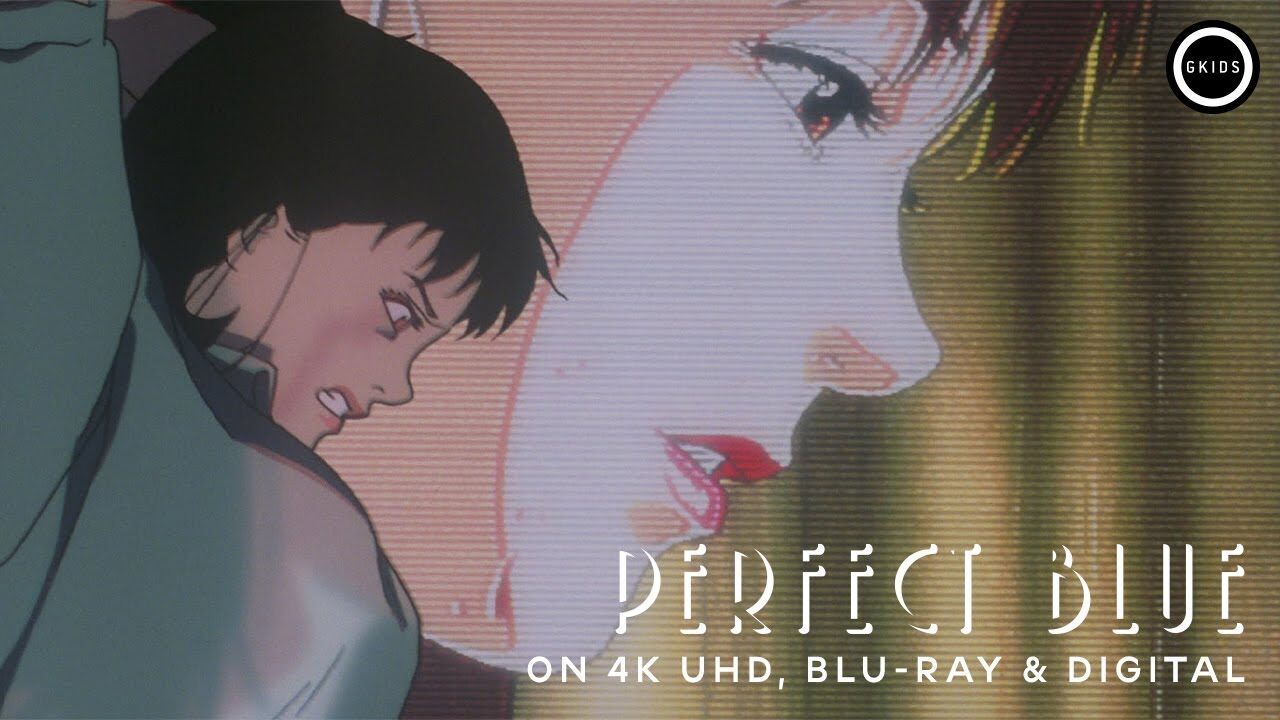
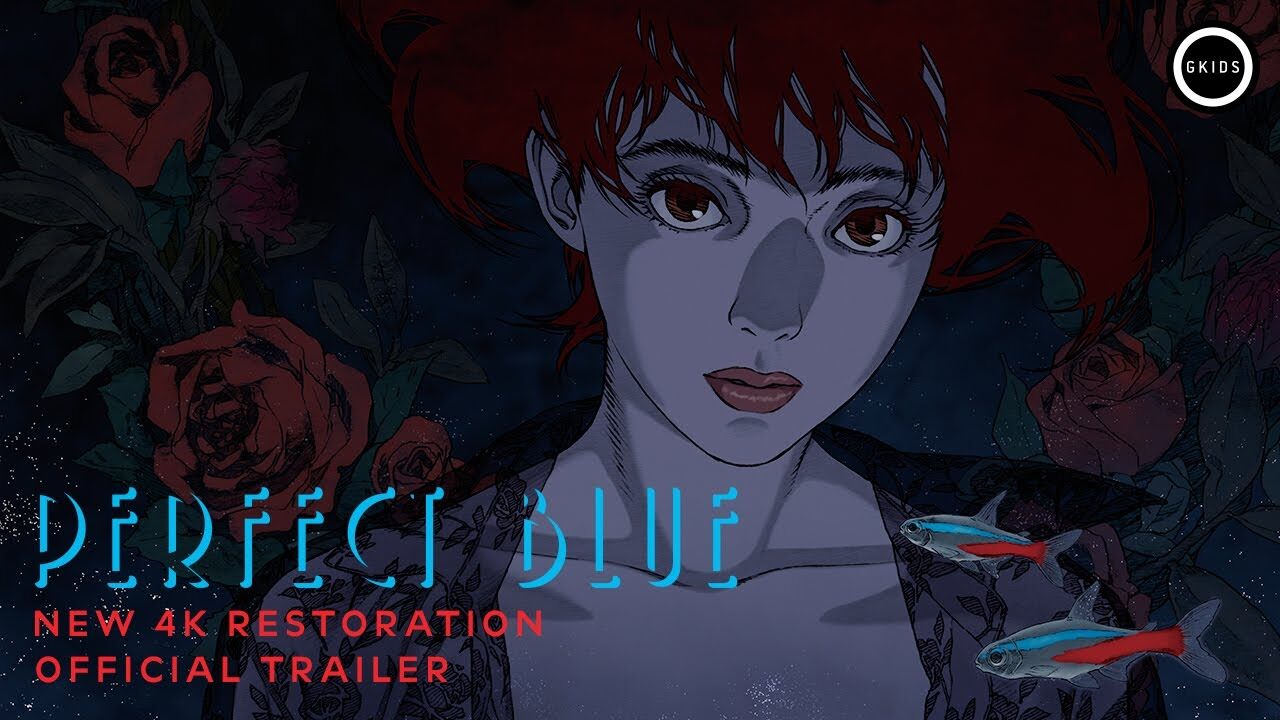
North American rights for Perfect Blue are licensed by GKIDS, which supervised a comprehensive 4K digital restoration.
Subscription streaming
The film streams on Max (available directly or via the Max add-on channel on Prime Video and Hulu) under GKIDS' distribution catalog. Streaming catalogs shift periodically; availability was verified as active as of late 2026.
Digital rental and purchase
The film is available to rent or purchase in HD and 4K with Japanese audio (English subtitles) and the English dub on Apple TV, Amazon Video, and Fandango at Home.
Physical home media
GKIDS and Shout! Factory distribute official Collector's Edition Blu-ray and 4K Ultra HD discs containing audio commentaries, promotional trailers, and retrospective staff lectures.
FAQ
Is Perfect Blue based on a true story or a book?
It is based on Yoshikazu Takeuchi's 1991 fiction novel Perfect Blue: Complete Metamorphosis (Kanzen Hentai). Satoshi Kon heavily reworked the book's narrative into a psychological thriller about subjective reality.
Why is Perfect Blue rated R or R-15?
The film received an R-15 rating in Japan and an R rating in the US due to graphic violence, stalking, nudity, and a traumatic scene depicting the filming of a simulated sexual assault on a television drama set.
Did Darren Aronofsky copy Perfect Blue for Black Swan?
While rumors persist that Aronofsky purchased remake rights to Perfect Blue to recreate its bathtub scream scene in Requiem for a Dream, Aronofsky has denied acquiring the rights and stated Black Swan was developed independently. Both works share striking visual and thematic parallels.
What does the final line 'I'm the real one' mean?
Satoshi Kon explained that Mima has completed her cycle of growth (destruction, chaos, and reconstruction) to establish her own identity. Speaking into a rearview mirror shows that identity depends on reflections from the outside world without ever settling into a permanent state.
Sources
Official sites & news
- s-kon.net Japanese
- s-kon.net Japanese
- eiga.com Japanese
- filmarks.com Japanese
- animeanime.jp Japanese
- wikipedia.org Japanese
- wikipedia.org
Blogs & fan discussion
- hatenadiary.com Japanese
- hatenablog.com Japanese
- charliessalon.com Japanese
- ameblo.jp Japanese
- k2-cinema.com Japanese
- bunshun.jp Japanese
- bunshun.jp Japanese
- reddit.com
Statements backed only by blogs or fan discussion are written as what fans say, not as fact.