Studio Ghibli
Studio Ghibli cats: every feline character explained
The most recognized Studio Ghibli cats are Jiji, Catbus, and Baron Humbert von Gikkingen. Neither Spirited Away nor Howl's Moving Castle features a feline character.
Every major Studio Ghibli cat explained
Studio Ghibli features feline characters across multiple films directed by Hayao Miyazaki, Yoshifumi Kondo, and Hiromasa Yonebayashi. Some are domestic pets, while others are spirits or animated statues.
Major Studio Ghibli cats at a glance
| Cat character | Film | Role |
|---|---|---|
| Jiji | Kiki's Delivery Service (1989) | Witch companion cat |
| Catbus | My Neighbor Totoro (1988) | Twelve-legged spirit transport |
| Baron von Gikkingen | The Cat Returns (2002) | Cat Bureau director statue |
| Muta (Moon) | Whisper of the Heart (1995) | Train-riding stray cat |
| Niya | The Secret World of Arrietty (2010) | Household calico cat |
| Cat King | The Cat Returns (2002) | Monarch of the Cat Kingdom |
Jiji in Kiki's Delivery Service
Jiji is the black cat companion to thirteen-year-old witch Kiki. In the film directed by Hayao Miyazaki, which was released in Japanese theaters on July 29, 1989, Jiji acts as her conversational partner while she establishes her courier business.
Rei Sakuma voiced Jiji in the original Japanese release, while Phil Hartman voiced him in the 1998 English release from Disney. Jiji falls in love with a white cat named Lily and fathers four kittens with her.
Catbus in My Neighbor Totoro
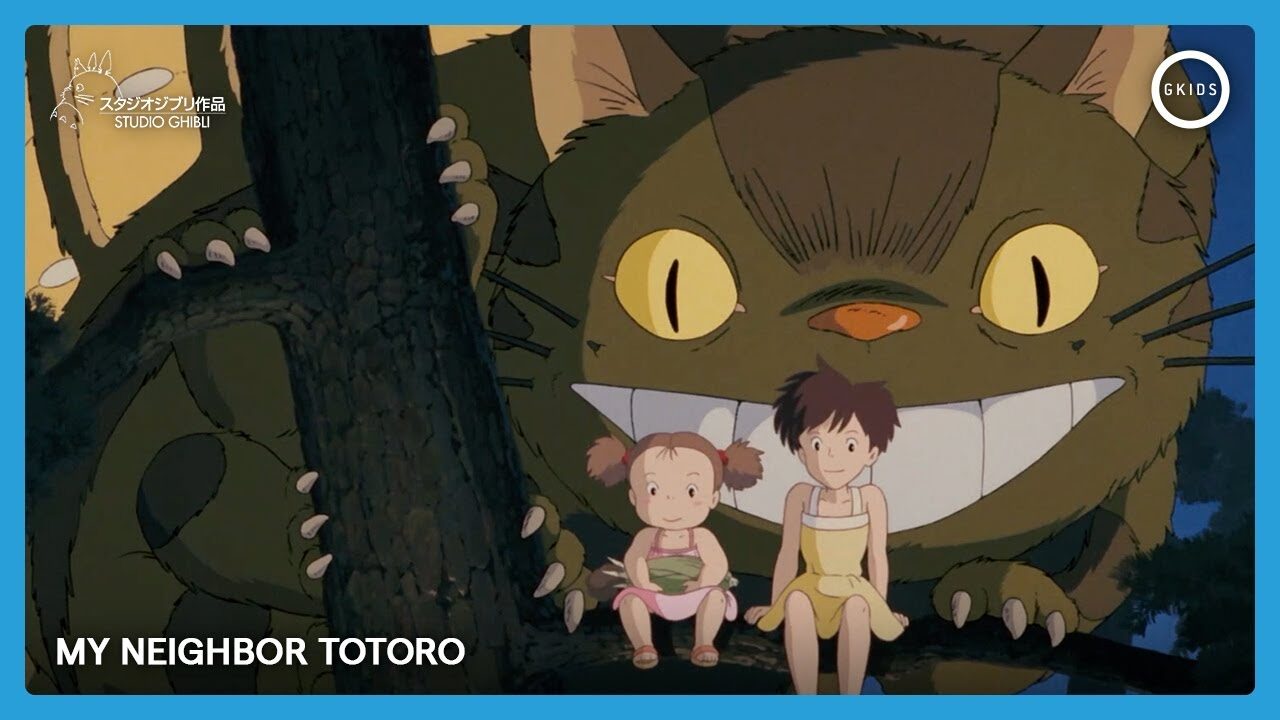
Catbus, or Nekobasu, debuted in My Neighbor Totoro when the film opened on April 16, 1988. It is a spirit creature shaped like a large twelve-legged Cheshire cat with glowing eyes that act as headlights.
Its fur forms a hollow passenger cabin with windows and seats. Miyazaki directed a 13-minute sequel short in 2002 titled Mei and the Kittenbus for the Ghibli Museum in Mitaka. That short introduces Kittenbus alongside giant feline trains.
Baron Humbert von Gikkingen
Baron Humbert von Gikkingen first appeared in the 1995 film Whisper of the Heart, directed by Yoshifumi Kondo. He begins as an antique cat statue dressed in formal attire with a top hat and walking cane. Shizuku Tsukishima uses him as the hero of the fantasy story she writes.
Studio Ghibli brought the character back as the lead in the 2002 film The Cat Returns, which was released in Japanese theaters on July 20, 2002, directed by Hiroyuki Morita. Cary Elwes voiced Baron Humbert von Gikkingen in the English dub.
Muta, Lune, and the Cat Kingdom
The Cat Returns centers on a hidden society of talking cats. Muta is a heavy white cat whose true name is Renaldo Moon, a notorious criminal who once ate every fish in a palace lake. Prince Lune is the heir to the throne whom high school student Haru rescues from traffic.
The Cat King is Lune's eccentric father, voiced by Tim Curry in the English dub. Yuki is a white palace servant who warns Haru and helps her escape before the royal wedding.
Niya in The Secret World of Arrietty
Niya is the household calico cat in the 2010 film The Secret World of Arrietty, directed by Hiromasa Yonebayashi. At first, Niya hunts the small Borrowers around the house and garden. Later, Niya warms up to Sho and helps him locate Arrietty.
The animators gave Niya realistic feline behavior. She has no human traits. Niya naps on the porch, stalks prey in grass, and ignores human commands.
The Spirited Away cat confusion
Is there a cat in Spirited Away?
Spirited Away was released in 2001 and contains no cat characters in its plot. Viewers searching for a Spirited Away cat usually think of Jiji from Kiki's Delivery Service or Catbus from My Neighbor Totoro.
Others mistake Boh, Yubaba's giant baby, whom the witch Zeniba turns into a chubby mouse. Boh rides on Chihiro's shoulder alongside Yubaba's pet bird, who was turned into a small fly.
The Jiji easter egg in Boh's room
There is one cat reference hidden in Spirited Away. When Chihiro enters Boh's giant toy room, she hides under a mound of pillows.
One pink cushion features a printed face of Jiji from Kiki's Delivery Service. The animators included this graphic as a background joke for fans who notice the print.
The Howl's Moving Castle cat confusion
Does Howl's Moving Castle have a cat?
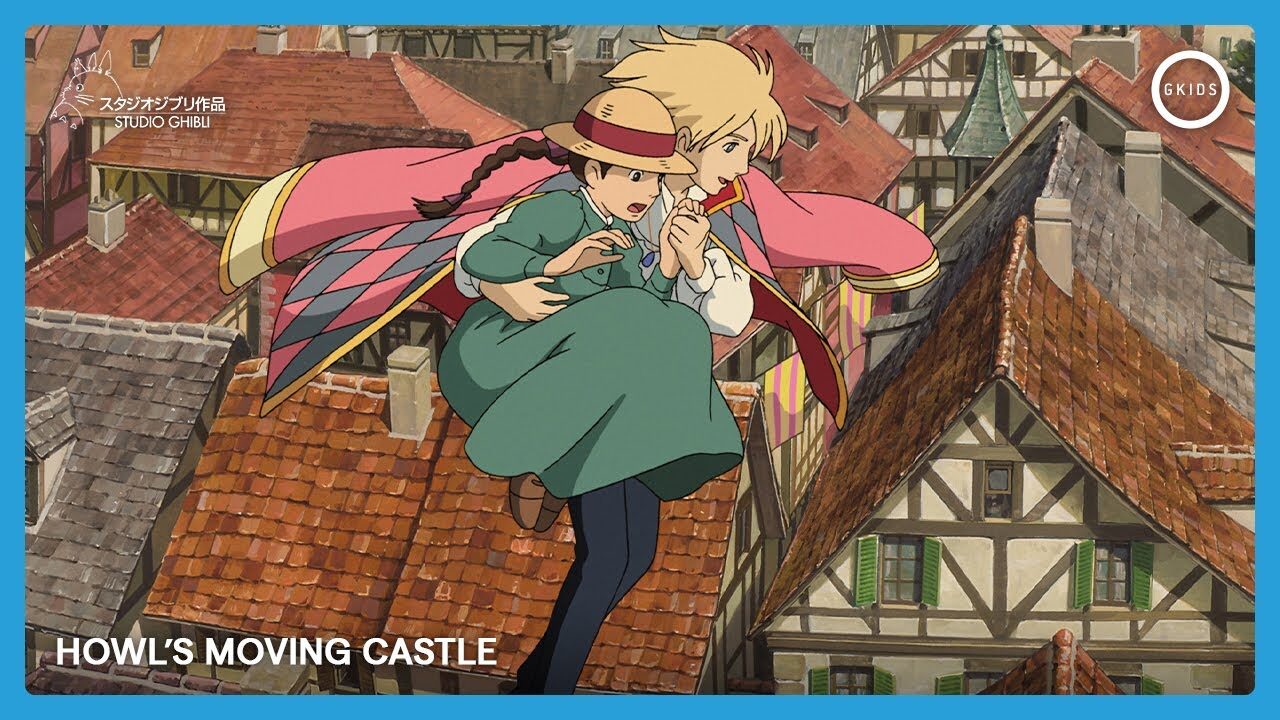
Zero cats appear in the 2004 film Howl's Moving Castle. The pet character in the castle is Heen, an elderly basset hound errand dog sent by Madame Suliman to spy on Howl, who later sides with Sophie's group instead.
The other character searchers associate with cats is Calcifer. Calcifer is a fire demon bound to Howl by a magic contract, not an animal.
Why people search for a cat in Howl
Searches for a cat in Howl's Moving Castle often arise because pet owners name their orange or black cats Calcifer, sharing videos of their pets set to Joe Hisaishi's piano themes. Viewers also conflate the movie with The Cat Returns, which debuted two years earlier in Disney's dub distribution catalog.
Hayao Miyazaki and his real studio cat
Ushiko, the Koganei studio cat
Hayao Miyazaki drew many cats in his career, but one real feline lived at his studio for years. Ushiko was a real-life stray calico cat who lived at the Studio Ghibli offices in Koganei, Tokyo.
Studio Ghibli staff named their office cat Ushiko because her black-and-white patches resembled cow markings. She wandered through production offices and slept on desks while artists drew frames.
Ushiko's influence on Ghibli films
Animators used Ushiko as a live model for feline movement. Ushiko was the live visual model for both Muta in Whisper of the Heart and Niya in The Secret World of Arrietty.
Ushiko appeared throughout Mami Sunada's 2013 documentary The Kingdom of Dreams and Madness. In the documentary, Hayao Miyazaki remarked on camera that Ushiko has no boss and lives completely free from human anxiety.
Major spoilers for Studio Ghibli cat endings
Why Jiji stops talking in Kiki's Delivery Service
At the end of Kiki's Delivery Service, Jiji no longer talks to Kiki and only meows like a normal cat. Studio Ghibli producer Toshio Suzuki explained that Jiji represents Kiki's inner dialogue. Once she became independent in Koriko, she no longer needed that inner voice, so Jiji returned to being an ordinary cat.
Disney's English dub changes to Jiji's ending
The 1998 Disney dub originally added an ad-libbed line where Jiji spoke again at the end, but Disney removed Phil Hartman's ad-libbed final line in 2010 home releases to restore the silence of the original Japanese ending.
The secrets of the Cat Kingdom in The Cat Returns
In The Cat Returns, Haru starts growing whiskers and cat ears because she begins accepting the idle pleasures of the Cat Kingdom. Baron warns her that losing her sense of self will trap her as a cat permanently.
Muta's criminal alias in The Cat Returns is revealed to be Renaldo Moon, who devoured every fish in a palace lake. Haru regains her human body at sunrise after running up the palace tower and choosing her real life.
FAQ
What is the black cat from Studio Ghibli called?
The black cat is Jiji from Kiki's Delivery Service (1989), a witch's familiar who speaks to Kiki.
What is the cat bus in Studio Ghibli called?
The creature is named Catbus, or Nekobasu in Japanese, from the 1988 film My Neighbor Totoro.
Is there a cat in Spirited Away?
No cat character appears in Spirited Away, though Boh turns into a mouse and a Jiji cushion appears in Boh's playroom.
Is there a cat in Howl's Moving Castle?
No cat appears in Howl's Moving Castle; the pet character is an elderly dog named Heen.
What Ghibli movie is all about cats?
The Cat Returns (2002) focuses entirely on cats, following a girl named Haru who visits the secret Cat Kingdom alongside Baron and Muta.
Sources
Official sites & news
Blogs & fan discussion
- note.com Japanese
- youtube.com Japanese
- movie.blog
- catsonfilm.net
- pudgycat.io
- cinemaetc.co.uk
- leftlion.co.uk
- geekdad.com
- reddit.com
- reddit.com
- reddit.com
- reddit.com
- reddit.com
Statements backed only by blogs or fan discussion are written as what fans say, not as fact.