Studio Ghibli
Princess Mononoke: Studio Ghibli’s Epic Masterpiece Explained
Released in 1997, Princess Mononoke is Hayao Miyazaki's landmark Studio Ghibli fantasy epic set in Muromachi-period Japan. It follows Ashitaka, a cursed Emishi prince caught between industrial Irontown and the sacred forest's gods.
Plot summary and historical setting
Historical setting and the Emishi
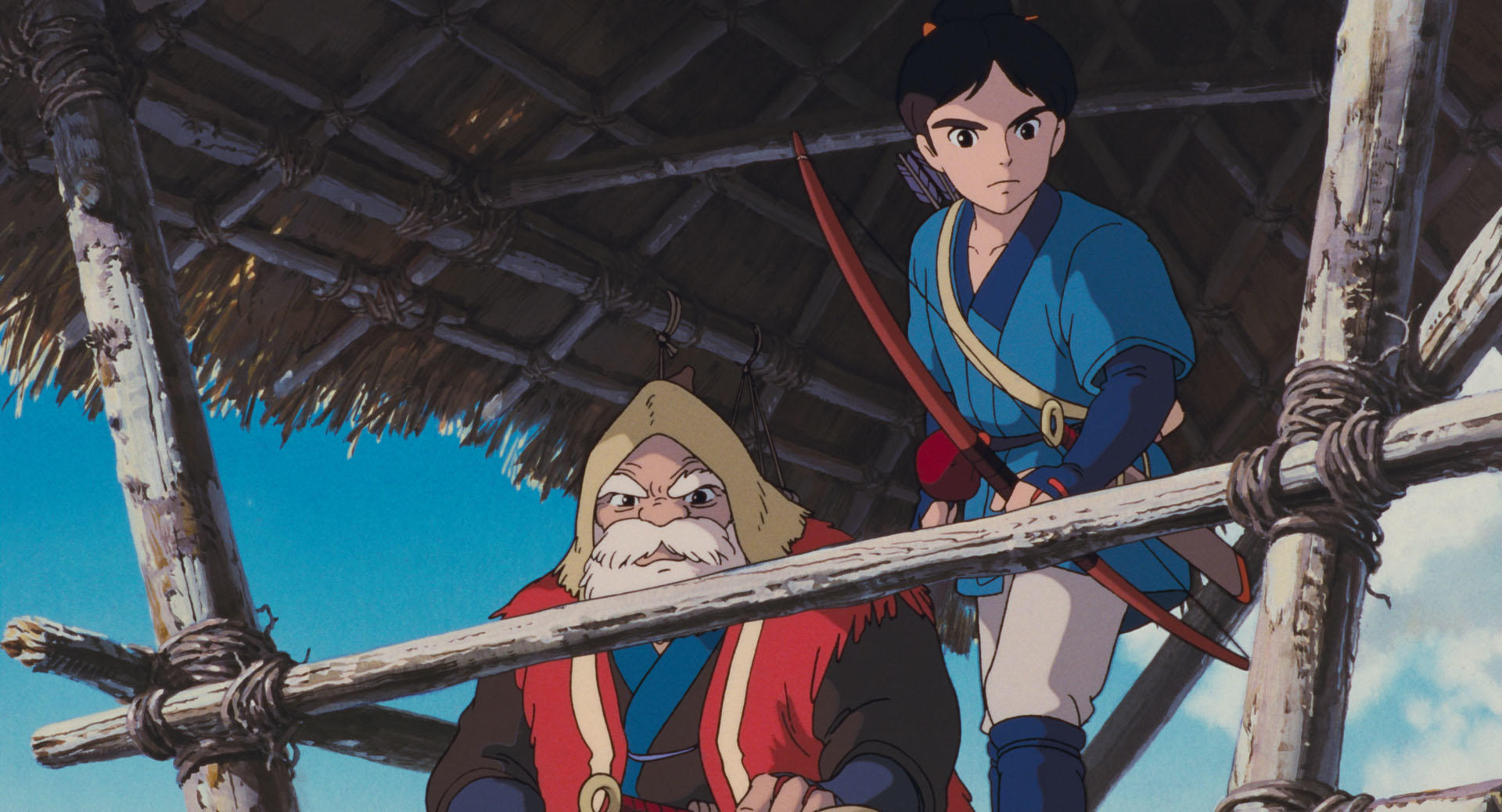
Princess Mononoke is set during Japan's Muromachi period (roughly 1336–1573), an era of civil unrest, shifting social hierarchies, and rapid technological transformation. The narrative begins in a secluded northeastern settlement. It is home to the Emishi, an indigenous cultural group marginalized by imperial central authority.
The boar god's attack and curse
An enraged giant boar corrupts into a demon (Tatarigami) and attacks the settlement. Ashitaka, the young Emishi prince, kills the monster to save his people. During the fight, the beast's writhing tendrils infect Ashitaka's right arm. The curse is fatal.
Ashitaka's exile to the west
Ashitaka cuts his topknot, an act of symbolic death that severs ties with his clan. Exiled forever, he rides his red elk (Akashishi) mount, Yakkul, heading west. He wants to find the source of the hatred that warped the boar god. In the western forests, he discovers a fierce three-way clash between:
- Tatara-ba (Irontown): A fortified iron-mining and forging enclave led by the ambitious Lady Eboshi. Irontown strips mountains of timber and ore while manufacturing firearms (ishibiya) to protect itself against feudal lords.
The forest and imperial factions
- The Forest Gods and San: The ancient beast gods, including the 300-year-old wolf deity Moro and the boar clan led by the blind patriarch Okkoto, fight industrial encroachment. San fights beside them. She is a human girl abandoned as an infant and reared as Moro's daughter.
- Imperial Agents and Opportunists: Mercenaries, monks, and firearms troops (Karakasa-ren and Ishibiya-shu) take direction from Jiko-bo. They carry secret orders to decapitate the Great Forest Spirit (Shishigami) for the Emperor, who believes its head grants immortality.
Production history and Miyazaki's creative pivot
The development of Princess Mononoke diverged radically from standard Studio Ghibli output up to 1997. It was the studio's most demanding production in terms of time, budget, and artistic philosophy.
The scrapped 1980 concept
In 1980, Hayao Miyazaki drafted an initial concept for a project titled Mononoke Hime as a prospective television special. That original version was an adaptation of Beauty and the Beast (La Belle et la Bête), featuring a samurai who promises his daughter in marriage to a giant mountain cat beast. Ghibli published this concept as a picture book in 1993. When pre-production for the feature film began in the mid-1990s, Miyazaki discarded the premise entirely, moving from a folklore fairy tale to grim historical fantasy.
Unprecedented budget and labor
Producer Toshio Suzuki convinced Miyazaki to double the studio's usual scale. Suzuki argued this would be the 50-something director's last window to execute a large-scale kinetic action film. Standard Ghibli features up to Whisper of the Heart (1995) operated on roughly 1 billion yen budgets across one year.
The production budget expanded to roughly 2.4 billion yen across two full years of animation production. The opening demon boar sequence alone, lasting 2 minutes and 10 seconds, took 1 year and 7 months to animate by hand-drawing thousands of writhing demonic serpents.
The 'Live' tagline battle
Advertising copywriter Shigesato Itoi created the minimalist tagline 'Ikiro.' ('Live.') for the movie's marketing campaign after going back and forth with Suzuki and Miyazaki. Itoi rejected dozens of suggestions that leaned toward romantic adventure or environmental preservation. He settled on a stark imperative verb: 'Ikiro.' ('Live.'). Miyazaki embraced the slogan because he explicitly wanted to reject easy moralizing about 'eco-friendly harmony.' He wanted to show the brutal struggle of living in a flawed, violent world.
Cast and production staff
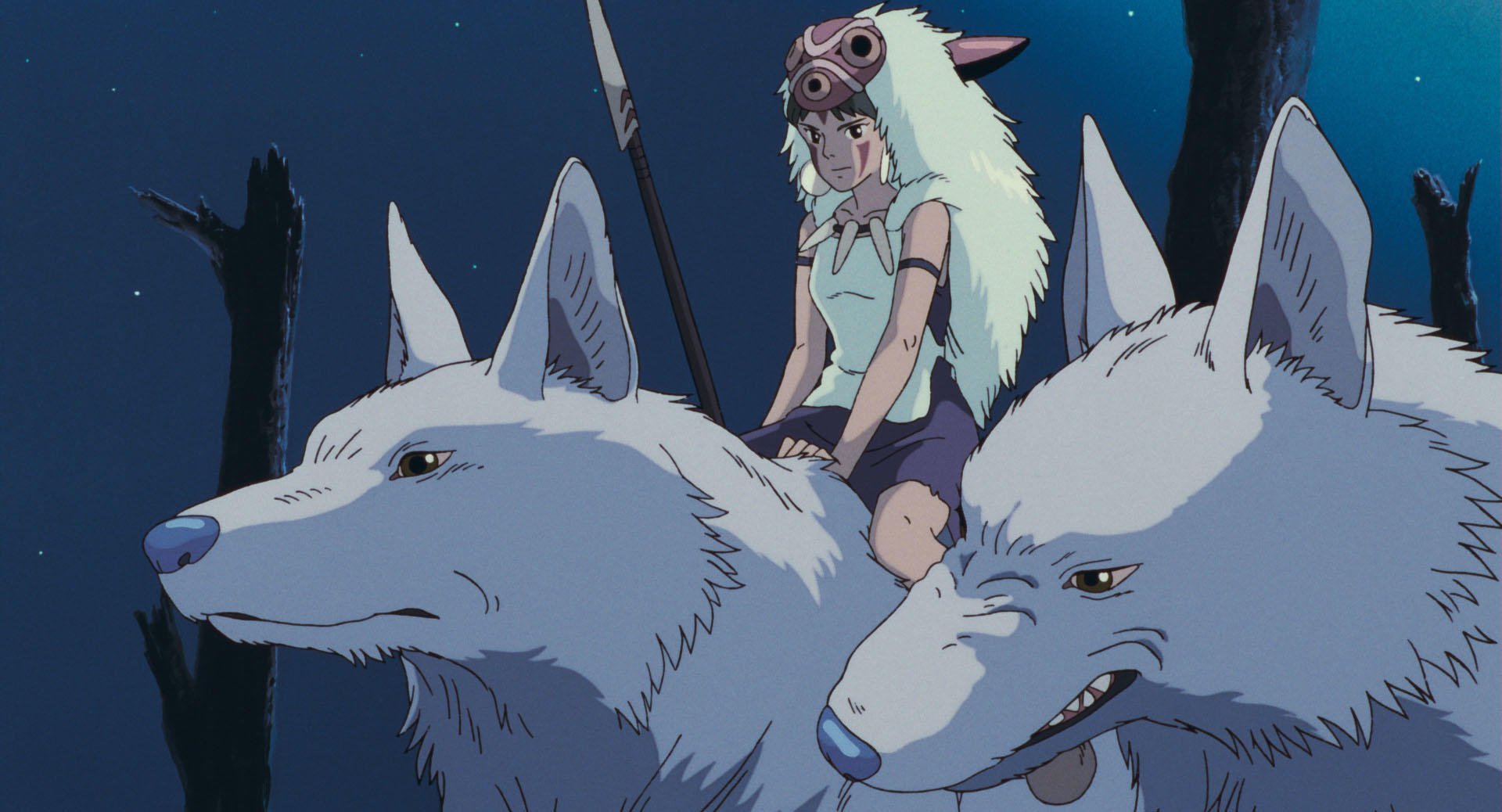
Veteran stage and live-action cinema performers filled most of the Japanese voice cast. Miyazaki bypassed traditional anime voice actors.
Lead voice cast: Ashitaka, San, and Kaya
| Character | Japanese Voice Actor | Role / Background |
|---|---|---|
| Ashitaka | Yoji Matsuda | Emishi prince cursed by the Tatarigami |
| San ("Mononoke Hime") | Yuriko Ishida | Human raised by wolves; defends the sacred forest |
| Kaya | Yuriko Ishida (dual role) | Ashitaka's village betrothed who gives him the obsidian dagger |
Lead voice cast: Eboshi, Moro, and Jiko-bo
| Character | Japanese Voice Actor | Role / Background |
|---|---|---|
| Lady Eboshi (Eboshi Gozen) | Yuko Tanaka | Ironmaster and charismatic ruler of Tatara-ba |
| Moro no Kimi | Akihiro Miwa | 300-year-old wolf god and adoptive mother to San |
| Jiko-bo | Kaoru Kobayashi | Traveling monk carrying an imperial commission to take the Shishigami's head |
Supporting voice cast: Okkoto and Hii-sama
| Character | Japanese Voice Actor | Role / Background |
|---|---|---|
| Okkoto (Okkotonnushi) | Hisaya Morishige | Blind 500-year-old boar god leading the assault against Irontown |
| Hii-sama | Mitsuko Mori | Elder oracle priestess of Ashitaka's Emishi village |
Supporting voice cast: Irontown residents
| Character | Japanese Voice Actor | Role / Background |
|---|---|---|
| Toki | Sumi Shimamoto | Outspoken bellows worker; voice of Nausicaä |
| Kohroku | Masahiko Nishimura | Ox-driver husband of Toki |
| Gonza | Tsunehiko Kamijo | Eboshi's gruff, intensely loyal bodyguard captain |
Ishida's dual role
Yuriko Ishida voiced both San and Ashitaka's village betrothed, Kaya, in a dual role.
Key production staff
Key Staff:
- Director & Original Story: Hayao Miyazaki
- Producer: Toshio Suzuki
- Animation Directors: Masashi Ando, Kitaro Kosaka, Yoshifumi Kondo
- Art Directors: Kazuo Oga, Nizo Yamamoto, Satoshi Kuroda, Naoya Tanaka, Yoji Takeshige
- Music & Score: Joe Hisaishi
- Theme Song Performance: Yoshikazu Mera (countertenor)
Japanese fan culture and production lore
In Japan, Princess Mononoke is a regular fixture on Nippon TV's Kinyo Roadshow (Friday Roadshow). The television premiere on January 22, 1999, earned a 35.2% television rating in the Kanto region. That placed it among the top 10 most-watched movie broadcasts in Japanese television history. Decades of reruns and official discussions have made several specific plot points famous among Japanese viewers.
The 'obsidian dagger' regifting debate
Whenever the movie airs, the Tama no Kogatana (玉の小刀) controversy trends on Japanese social media. When Ashitaka leaves his village, Kaya risks severe punishment to run to him. She hands him an obsidian pendant dagger, pleading with him never to forget her.
In Emishi culture, this obsidian dagger represents a pledge of lifelong love from a woman to a man. Later in the film, Ashitaka hands this identical dagger to Moro's wolf cub to pass along to San.
Miyazaki's defense of the dagger
Users on X and 5ch routinely joke about Ashitaka being an onna-tarashi (womanizer or cad) for regifting an heirloom from his ex to his current interest.
As reported by Japanese culture website Magmix, Miyazaki explained that cutting Ashitaka's topknot signified ritual social death. Ashitaka could never return to his village. The dagger was his sole sacred talisman. He entrusted it to San as a protective charm because she was entering a mortal war.
Hansen's disease patients at Tatara-ba
For years, viewers debated the identity of the bandaged workers who craft firearms in Lady Eboshi's private chambers. According to Japanese media outlet Magmix, Miyazaki confirmed in a 2016 lecture that these workers were inspired by Hansen's disease patients after his visits to Tama Zenshoen sanatorium.
Miyazaki lived roughly 15 minutes on foot from Tama Zenshoen, a national leprosarium in Higashimurayama, Tokyo. After touring its museum and confronting Japan's history of ostracizing lepers, Miyazaki wanted to depict people with an incurable condition living with dignity and purpose. He avoided framing them as objects of pity.
The surviving kodama and Totoro
In the final frames, a single Kodama (tree spirit) reappears on a mossy branch in the regenerated wilderness. During production, Miyazaki suggested this lone survivor eventually grew ears and became Totoro. He remarked to his animation staff that if Totoro had existed for millennia, he wondered why Totoro was not already in this ancient forest.
Box office and release records
Upon its theatrical premiere in July 1997, Princess Mononoke became a cultural phenomenon across Japan. Viewers queued around entire city blocks in the summer heat. Cinemas even let patrons sit in the aisles to handle the crowds.
Box office milestones
- Domestic Box Office: The film initially grossed 19.3 billion yen at the Japanese box office, surpassing E.T. to become the all-time highest-grossing film in Japan at that time.
- Re-release Additions: With re-releases, including the 2020 theatrical revival, Princess Mononoke's total Japanese box office gross reached 20.18 billion yen.
Critical accolades
- Awards: It became the first animated production to win Picture of the Year at the Japan Academy Film Prize (21st edition) and won Special Award honors at the 40th Blue Ribbon Awards.
Official ways to watch Princess Mononoke in the United States
Viewers in the United States have several official options:
Streaming availability
- Streaming: Princess Mononoke is exclusively available for subscription streaming on Max in the United States under Warner Bros. Discovery's multi-year licensing arrangement with Studio Ghibli and North American distributor GKIDS. While Netflix streams Ghibli films across Europe, Latin America, and Asia, the title is unavailable on Netflix in the United States.
Digital purchase and rental
- Digital Purchase & Rental: Available for digital rental or purchase in both English subtitled and English dubbed versions on Apple TV, Amazon Prime Video, Google Play Movies, Fandango at Home (formerly Vudu), and YouTube.
Home video releases
- Home Video: GKIDS and Shout! Factory distribute official North American Blu-ray, DVD, and Collector's Edition releases, featuring both the Japanese audio track and the Neil Gaiman-adapted English dub.
The ending and core philosophy (spoilers)
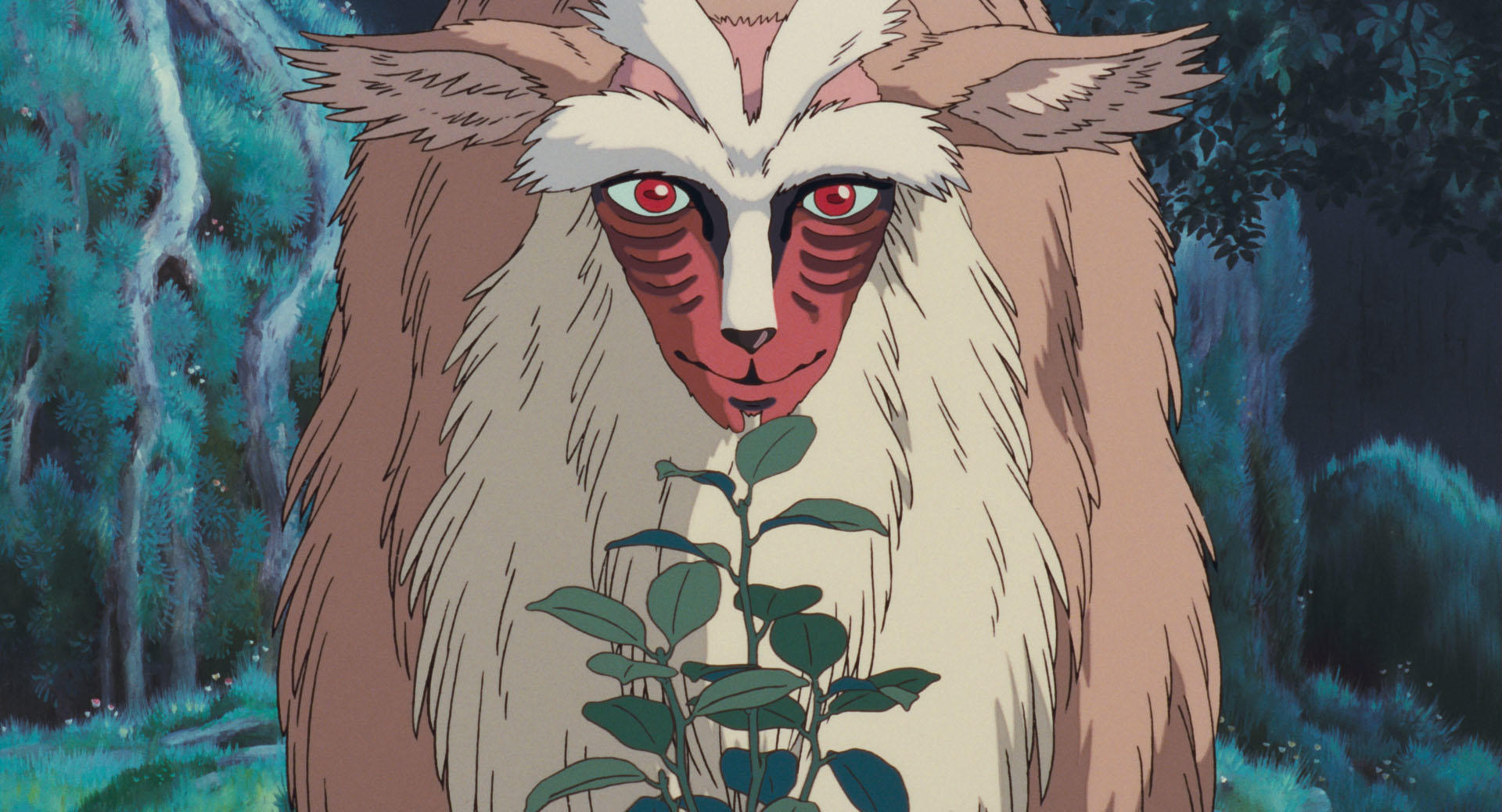
The decapitation of the Forest Spirit
Lady Eboshi shoots and decapitates the Great Forest Spirit right as it shifts into the towering Night-Walker (Didarabocchi). Severed from its head, the entity pours out black liquid death. It kills plant life and any human or animal it touches across the valley.
The burning of Irontown and Eboshi's fate
Irontown burns as the ooze sweeps over it. Producer Toshio Suzuki suggested killing Lady Eboshi in the finale. Miyazaki refused. Instead, Eboshi loses an arm to Moro's severed head as the dying wolf strikes one last blow to protect San.
Returning the head and restoration
Ashitaka and San recover the head from Jiko-bo's lockbox. Together, they hold it up to return it to the creature as the morning sun arrives.
The spirit falls across the valley. It unleashes a final wave of wind that clears the poisonous muck, coating the barren ground in wild green grasses and flowers.
Not an easy fairytale ending
The conclusion of Princess Mononoke rejects simplistic resolution:
- The forest is forever altered: The ancient primordial cedar forest does not return. Everyday meadowland and low brush grow in its place. The era of demigods and mythical beasts talking to mankind has closed.
Ashitaka and San's divergent paths
- Ashitaka and San separate: San still cannot forgive humanity for destroying the woods. Ashitaka respects her boundary. He does not force her into human society. San remains in the forest, Ashitaka settles nearby to aid Tatara-ba, and they agree to see each other regularly.
Lady Eboshi's resolve
- Eboshi's resolve: Lady Eboshi survives, acknowledges her blindness, and thanks Ashitaka. She announces to her citizens that they will build a better, peaceful town. Human industry will continue, but with an awareness of the cost.
FAQ
Why does Kaya call Ashitaka 'Ani-sama' if she is his betrothed?
In ancient regional Japanese dialects, young women used the honorific ani-sama (兄さま) for older, respected men within their clan. It did not strictly mean a biological brother. Studio Ghibli confirmed that Kaya was officially recognized as Ashitaka's betrothed.
What kind of animal is Yakkul?
Yakkul is an imaginary creature designed as a red elk (Akashishi), an extinct species of large capricorn conceptualized by Hayao Miyazaki as a steed ridden by the ancient Emishi.
Did the Great Forest Spirit heal the sick workers in Irontown?
In the film's climax, the healing winds of the Shishigami relieve the suffering of the bandaged Hansen's disease patients in Tatara-ba. Miyazaki noted this represented spiritual release and an affirmation to live, not a magical cure for human illness.
Sources
Official sites & news
- cinematoday.jp Japanese
- crank-in.net Japanese
- eiga.com Japanese
- wikipedia.org Japanese
Reference
- magmix.jp Japanese
Blogs & fan discussion
- cinetoro.jp Japanese
- moviewalker.jp Japanese
- jpn.org Japanese
- corobuzz.com Japanese
- note.com Japanese
- hatenablog.com Japanese
- hbomax.com
- whats-on-netflix.com
- yahoo.co.jp Japanese
- reddit.com
Statements backed only by blogs or fan discussion are written as what fans say, not as fact.