Studio Ghibli
Hayao Miyazaki's My Neighbor Totoro: Film Guide and History
My Neighbor Totoro is a 1988 Japanese animated fantasy film written and directed by Hayao Miyazaki and produced by Studio Ghibli. It follows sisters Satsuki and Mei Kusakabe as they encounter friendly forest spirits in 1950s rural Japan.
Overview and release history
My Neighbor Totoro debuted in Japanese theaters on April 16, 1988. It was released by Tokuma Shoten on an unusual double bill alongside Isao Takahata's Grave of the Fireflies. Producer Yasuyoshi Tokuma financed the project after Miyazaki finished Nausicaä of the Valley of the Wind and Castle in the Sky.
The film grossed over $41 million at the global box office. It proved far more lucrative on home media and licensed merchandise, bringing in roughly $1.46 billion in total lifetime revenue. Totoro quickly evolved into the official studio mascot for Studio Ghibli.
The film in Japanese
In Japanese, the movie is titled Tonari no Totoro (となりのトトロ). Tokorozawa City in Saitama Prefecture served as the geographic model for the rural community depicted in the story.
Domestic ticket sales and Chinese release
In Japan, the original 1988 theatrical release sold 801,680 tickets. That run earned ¥588 million in distribution rental income. Scholar Seiji Kano calculated total box-office receipts in Japan at ¥1.17 billion ($10.6 million) by 2005.
Political tensions between China and Japan delayed a Chinese theatrical release for thirty years. The film opened in China in December 2018. It earned $13 million during its opening weekend, finishing second behind Aquaman, and reached $25.8 million by February 2019.
Plot synopsis and characters
Set in postwar 1950s Japan, university archaeology lecturer Tatsuo Kusakabe moves into an old country house with daughters Satsuki and Mei. Their mother, Yasuko, stays at Shichikokuyama Hospital recovering from a long-term chest illness.
Meeting the forest spirits
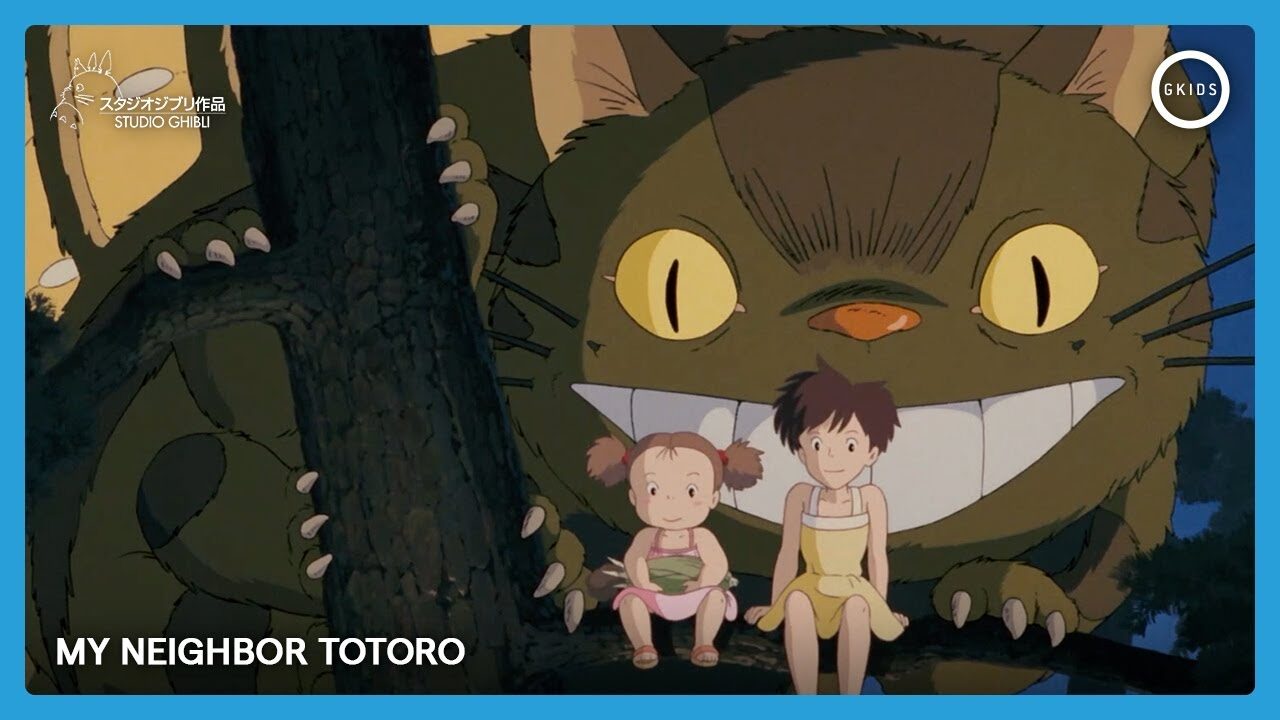
The girls encounter soot-dwelling spirits called susuwatari inside their dusty home. Four-year-old Mei soon discovers two smaller forest spirits and follows them into the hollow of an enormous camphor tree, where she falls asleep on the belly of a giant creature she calls Totoro.
The bus stop and Catbus
Ten-year-old Satsuki encounters Totoro while standing in the rain waiting for their father's bus. She offers him her father's umbrella, delighting the creature with the pitter-patter sound of falling drops. In return, Totoro hands the girls a parcel of seeds before boarding the multi-legged Catbus.
The midnight ritual and missing Mei
Totoro and the smaller creatures perform a midnight dance around the planted seeds, growing them into a massive tree before taking the girls on a flying top ride. Later, a telegram reveals a setback in Yasuko's hospital treatment, postponing her planned weekend visit.
Mei tries to walk to the hospital alone with an ear of fresh corn and gets lost. Satsuki asks Totoro for help, and he summons the Catbus to locate Mei and take both sisters to the hospital windows.
Voice cast table
| Character | Japanese Cast | Disney Dub Cast (2005) |
|---|---|---|
| Satsuki Kusakabe | Noriko Hidaka | Dakota Fanning |
| Mei Kusakabe | Chika Sakamoto | Elle Fanning |
| Tatsuo Kusakabe | Shigesato Itoi | Tim Daly |
| Yasuko Kusakabe | Sumi Shimamoto | Lea Salonga |
| Totoro / Catbus | Hitoshi Takagi / Naoki Tatsuta | Frank Welker |
| Granny | Tanie Kitabayashi | Pat Carroll |
Background on Tatsuo Kusakabe
Tatsuo is 32 years old, stands 180 cm tall, and supplements his university salary with Chinese translation work. Actor Issey Ogata was originally cast for the part before stepping down. Shigesato Itoi, who handled promotional copy and slogans for Ghibli, voiced Tatsuo instead.
Meaning of Totoro and character lore
The name Totoro did not originate from traditional Japanese folklore. It came from a local child who mispronounced Tokorozawa as Totorozawa. In the story, Mei misinterprets the creature's low roar of Duo, Duo, Volo as the troll from the picture book Three Billy Goats Gruff.
Lore and concept names
According to Miyazaki, Totoro is a forest animal rather than a spirit. Concept notes name the large grey Totoro Miminzuku, an owl-inspired figure who is 1,302 years old and two meters tall. The medium blue creature is Zuku, aged 679, while the tiny white spirit is Min, aged 109.
Backstory of the Totoro tribe
Studio notes detail an extended backstory where Totoro belongs to a remnant tribe pushed toward extinction by ancient clashes with humans. During the Jomon period, Totoro learned to make earthenware vessels from humans, later using them to store acorns. He picked up spinning tops from people during the Edo period.
English dub versions
Two separate English dubs exist for the film. In 1989, Streamline Pictures produced an English dub for Japan Airlines in-flight entertainment, distributed to US theaters in 1993 by Troma's 50th St. Films label. Lisa Michelson voiced Satsuki, while Cheryl Chase voiced Mei.
The Disney dub
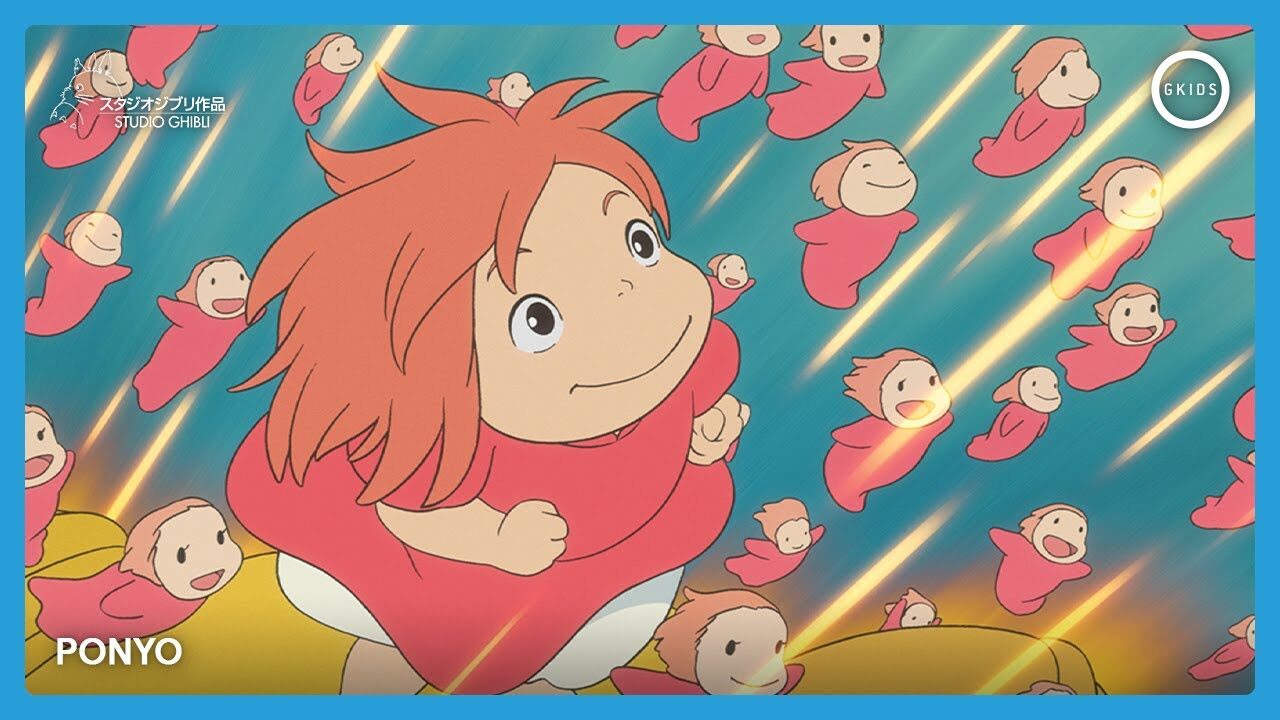
Walt Disney Pictures produced a star-studded dub in 2004 following the expiration of Streamline's license. Real-life sisters Dakota Fanning and Elle Fanning voiced Satsuki and Mei. Disney released this version on home video in March 2006 alongside the debut of Ponyo and older studio ghibli movies.
Streamline vs Disney audio details
Cassie Byram sang the musical numbers for the 1989 Streamline version. The 2004 Disney dub kept those translated lyrics, but used Sonya Isaacs to perform the vocals. Rick Dempsey directed the Disney sessions from a script adapted by Don Hewitt and Cindy Hewitt.
Production and The Art of My Neighbor Totoro book
Eight animators completed the movie in eight months under tight deadlines. Background painter Kazuo Oga joined after Miyazaki showed him an early concept watercolor of a creature standing in satoyama farmland. Oga's translucent watercolor approach established the signature artistic look for Studio Ghibli.
Animation details
Miyazaki originally conceived the narrative around a single young girl. He split her into two sisters so Satsuki could wait at the dark bus stop. The production team spent an entire month animating four-color tadpoles swimming through blurred stream water. The official companion volume The Art of My Neighbor Totoro was published by Tokuma Shoten to preserve these production cels and sketches.
Cel effects and opening sequence
The studio produced rain streaks by scratching lines directly into individual animation cels before superimposing them. Water ripples used two distinct colors for highlights and shadows. Miyazaki did not storyboard the opening credit sequence, building it directly through exposure time sheets.
Soil debates and runtime expansion
Oga and Miyazaki debated the background dirt colors during pre-production. Oga wanted the black dirt of Akita Prefecture, but Miyazaki insisted on the red soil of the Kanto region. The film expanded past its initial 60-minute target as Miyazaki added scenes establishing the father's profession and family background.
Soundtrack and musical score
Joe Hisaishi composed the musical score for the film. This project marked his third major feature score for Miyazaki following Nausicaä of the Valley of the Wind and Castle in the Sky. Hisaishi used a Fairlight digital synthesizer alongside a full orchestra.
Composition influences
Hisaishi cited minimalists and avant-garde composers Terry Riley, Philip Glass, Steve Reich, Karlheinz Stockhausen, and John Cage as inspirations for his arrangements. Tokuma Shoten released an Image Song CD in 1987 ahead of the movie. The official soundtrack followed on May 1, 1988, featuring five vocal tracks by Azumi Inoue including Stroll and My Neighbor Totoro.
Home media sales and theatrical re-releases
Tokuma Shoten put the movie on VHS and LaserDisc in August 1988. In the United States, 20th Century Fox issued the Streamline version on tape in 1993, selling over 500,000 copies by 1996. Disney reissued the film on DVD in March 2010, selling 3.8 million units for $64.5 million in domestic revenue by October 2018.
Global video distribution
Japanese retail sales reached 3.5 million copies across VHS and DVD formats by April 2012, generating ¥16.1 billion ($202 million). In the UK, the title placed among the top ten best-selling foreign home releases for five straight years between 2015 and 2019. In 2023, GKIDS held 35th-anniversary screenings across 970 US theaters.
Stage play adaptation
Playwright Tom Morton-Smith adapted the movie into a stage production with original music from Joe Hisaishi. Phelim McDermott directed the show, co-produced by Hisaishi, Nippon TV, and the Royal Shakespeare Company. Miyazaki approved the production under the condition that Hisaishi participated directly.
Puppetry and London runs
The stage show runs an hour longer than the movie and uses adult actors for Satsuki and Mei. Puppet master Basil Twist designed the puppet creatures, which Jim Henson's Creature Shop built in Los Angeles. The show set the single-day ticket record at London's Barbican Centre on May 19, 2022, before transferring to the Gillian Lynne Theatre in the West End in March 2025.
Where to watch and real-world legacy
North American viewers can stream the movie legally on Max, which licensed the Studio Ghibli library from distributor GKIDS. International audiences across Europe, Latin America, and other regions can watch on Netflix. Physical Blu-ray editions are distributed in North America by GKIDS.
Real-world locations and preservation
The setting of Sayama Hills led to real-life conservation initiatives. The Totoro no Furusato Foundation acquired protected woodland plots known as Totoro no Mori starting in 1991. Visitors can also tour Kurosuke's House, an old farming property in Saitama registered as a Tangible Cultural Property.
Totoro Forest acquisition
Conservation efforts began in 1986 through local groups and Waseda University to protect the Sayama Hills from development. The Totoro no Furusato Foundation formed in April 1990, with Miyazaki serving as a member. The foundation bought its first woodland tract, Totoro's Forest no. 1, in August 1991, and expanded to 55 preserved sites by December 2020.
FAQ
Did Dakota Fanning voice Satsuki in My Neighbor Totoro?
Yes. Dakota Fanning voiced Satsuki Kusakabe in Disney's 2004 English dub, starring alongside her younger sister Elle Fanning, who voiced Mei.
What does the name Totoro mean?
The name stems from a child mispronouncing Tokorozawa as Totorozawa. Within the film, Mei misunderstands the word troll (tororu) from the Three Billy Goats Gruff story when Totoro roars at her.
Is Totoro a spirit or an animal?
Director Hayao Miyazaki stated that Totoro is a forest animal rather than a supernatural spirit, although human villagers revere him like a woodland kami.
Sources
Official sites & news
Blogs & fan discussion
- Official Trailer - YouTube Japanese
- My Neighbor Totoro - Ghibli Wiki
- Totoro - Ghibli Wiki
- Totoro no Mori - Ghibli Wiki
Statements backed only by blogs or fan discussion are written as what fans say, not as fact.