Studio Ghibli
Spirited Away: Complete Guide to Hayao Miyazaki's Masterpiece
Spirited Away is a 2001 Studio Ghibli animated fantasy film written and directed by Hayao Miyazaki. The story follows ten-year-old Chihiro Ogino, who wanders into the spirit world and works in a bathhouse to free her parents.
Where to watch Spirited Away in the United States
Licensing and audio options
In North America, home distribution and licensing rights for Studio Ghibli's catalog are managed by GKIDS and Warner Bros. Discovery. Both the original Japanese audio track (with English subtitles) and Disney's 2002 English dub are available across official services.
US streaming services
| Platform | Access Method | Audio & Subtitle Options |
|---|---|---|
| Max | Subscription streaming | Japanese & English audio; English subtitles |
| Apple TV Store | Digital rental or purchase | Japanese & English audio; English subtitles |
| Amazon Prime Video | Digital rental or purchase | Japanese & English audio; English subtitles |
Additional digital and physical media
| Platform | Access Method | Audio & Subtitle Options |
|---|---|---|
| Fandango at Home | Digital rental or purchase | Japanese & English audio; English subtitles |
| GKIDS / Shout! Factory Blu-ray | Physical disc purchase | 1080p video, DTS-HD Master Audio, collector booklets |
International streaming and theatrical screenings
Note: Outside the United States and Japan, Spirited Away streams globally on Netflix. In US cinemas, GKIDS and Fathom Events regularly bring the film back to theaters nationwide as part of the annual Studio Ghibli Fest.
Film overview and production details
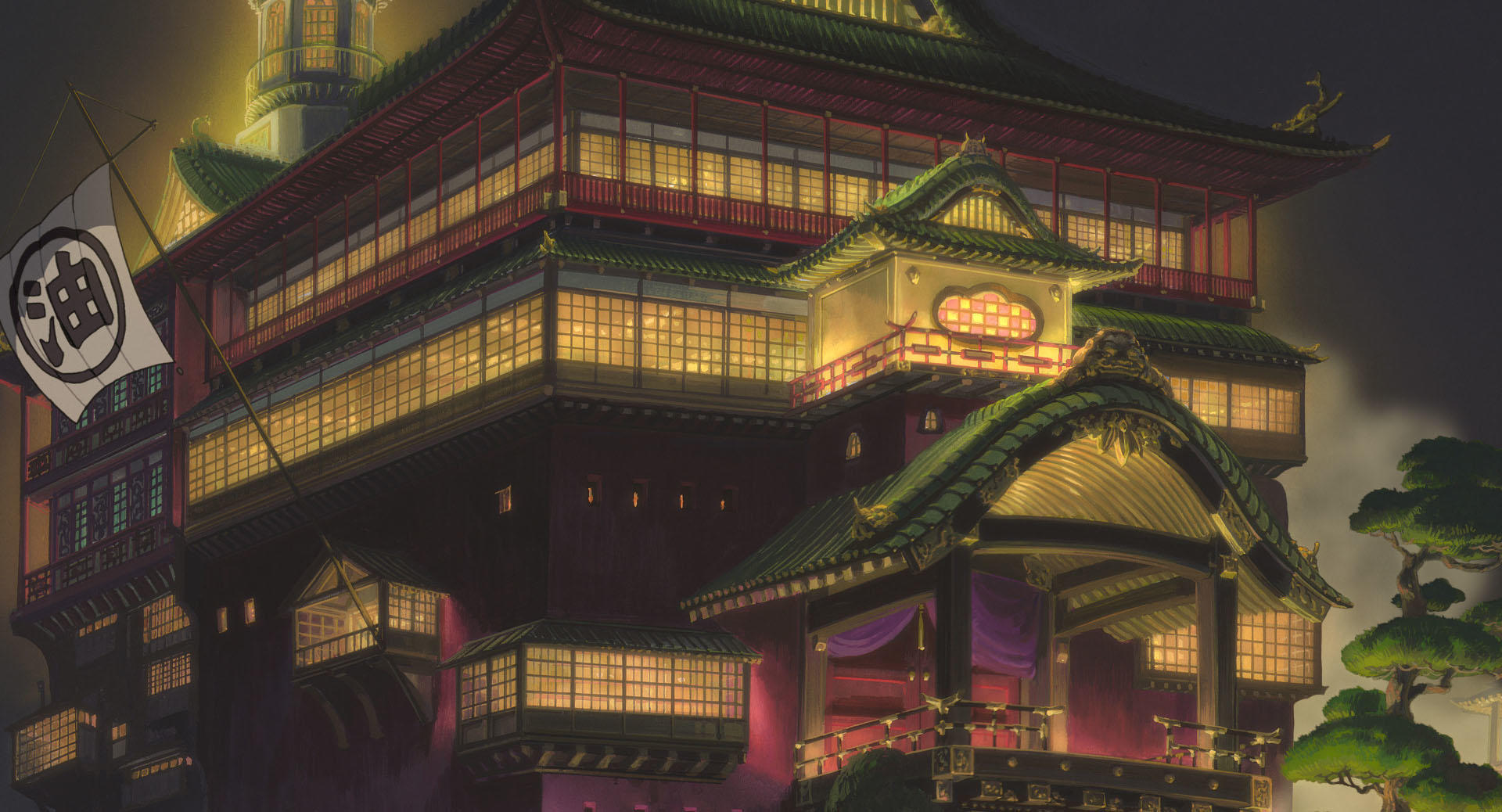
Production inspiration
Hayao Miyazaki developed Spirited Away after spending summer vacations with the ten-year-old daughter of his associate producer, Seiji Okuda.
Subverting contemporary tropes
Realizing that contemporary manga and films aimed at young girls focused almost exclusively on romance and idealized crushes, Miyazaki set out to craft an adventure about an ordinary, somewhat sullen girl who discovers her own inner strength through real-world perseverance and labor.
Film titles and crew
| Feature | Detail |
|---|---|
| Japanese Title | 千と千尋の神隠し (Sen to Chihiro no Kamikakushi) |
| English Translation | Sen and Chihiro's Spiriting Away |
| Director & Screenplay | Hayao Miyazaki |
| Producer | Toshio Suzuki |
Studio and release information
| Feature | Detail |
|---|---|
| Production Studio | Studio Ghibli |
| Music | Joe Hisaishi |
| Japanese Release Date | July 20, 2001 |
| US Release Date | September 20, 2002 (limited); March 28, 2003 (wide) |
Runtime, rating, and honors
| Feature | Detail |
|---|---|
| Runtime | 124 minutes (2 hours 4 minutes) |
| MPA Rating | PG for stylized thematic elements |
| Key Honors | Best Animated Feature (75th Academy Awards); Golden Bear (Berlin International Film Festival 2002) |
Plot summary
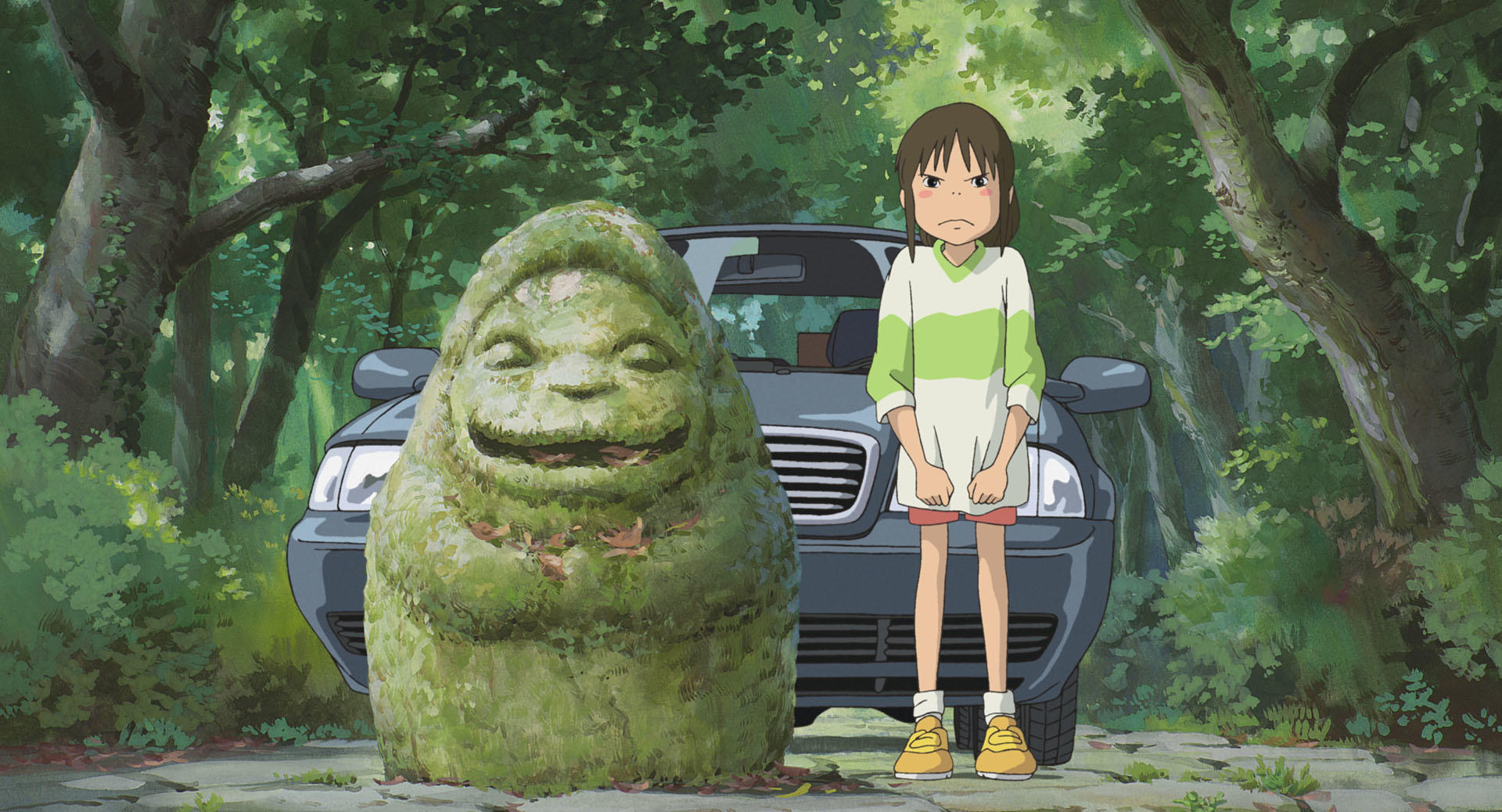
The mysterious red tunnel
While driving to their new suburban home, ten-year-old Chihiro Ogino and her parents take an unpaved detour through an ancient forest and discover a mysterious red tunnel. Passing through, they find what looks like an abandoned, wind-swept theme park.
Meeting Haku
Chihiro's parents follow the aroma of fresh cooking to an empty stall and feast greedily on piles of food without waiting for the owner. Refusing to eat, Chihiro explores the area and meets a boy named Haku, who urgently warns her to cross the riverbed before nightfall.
The transformation and escape
When twilight arrives, ethereal spirits emerge, the surrounding plains flood with ocean water, and Chihiro returns to the food stand to discover her parents transformed into giant swine. Haku finds Chihiro and prevents her from dissolving out of existence by giving her spirit-world food to ground her physical body.
Employment at the bathhouse
To survive in a world hostile to human intruders, Chihiro must find steady work. She descends into the boiler room to win the support of the six-armed boiler operator Kamaji, who introduces her to Lin, a bathhouse servant.
Together, they send Chihiro to the penthouse office of Yubaba, the formidable witch who rules the Aburaya bathhouse. Yubaba reluctantly agrees to employ Chihiro but magically confiscates the majority of the kanji from her name, rechristening her Sen to weaken her memory and bind her to servitude.
Trials of Sen
Sen proves her worth by successfully bathing a severely polluted Stink Spirit, unveiling it as an ancient and wealthy River God. During her shifts, she inadvertently welcomes No-Face (Kaonashi), a reclusive, faceless entity that enters the bathhouse and wreaks havoc by pandering to the staff's insatiable hunger for gold nuggets.
Sen has to manage bathhouse duties, nurse a wounded Haku, and break the spell on her parents.
Characters and complete voice cast
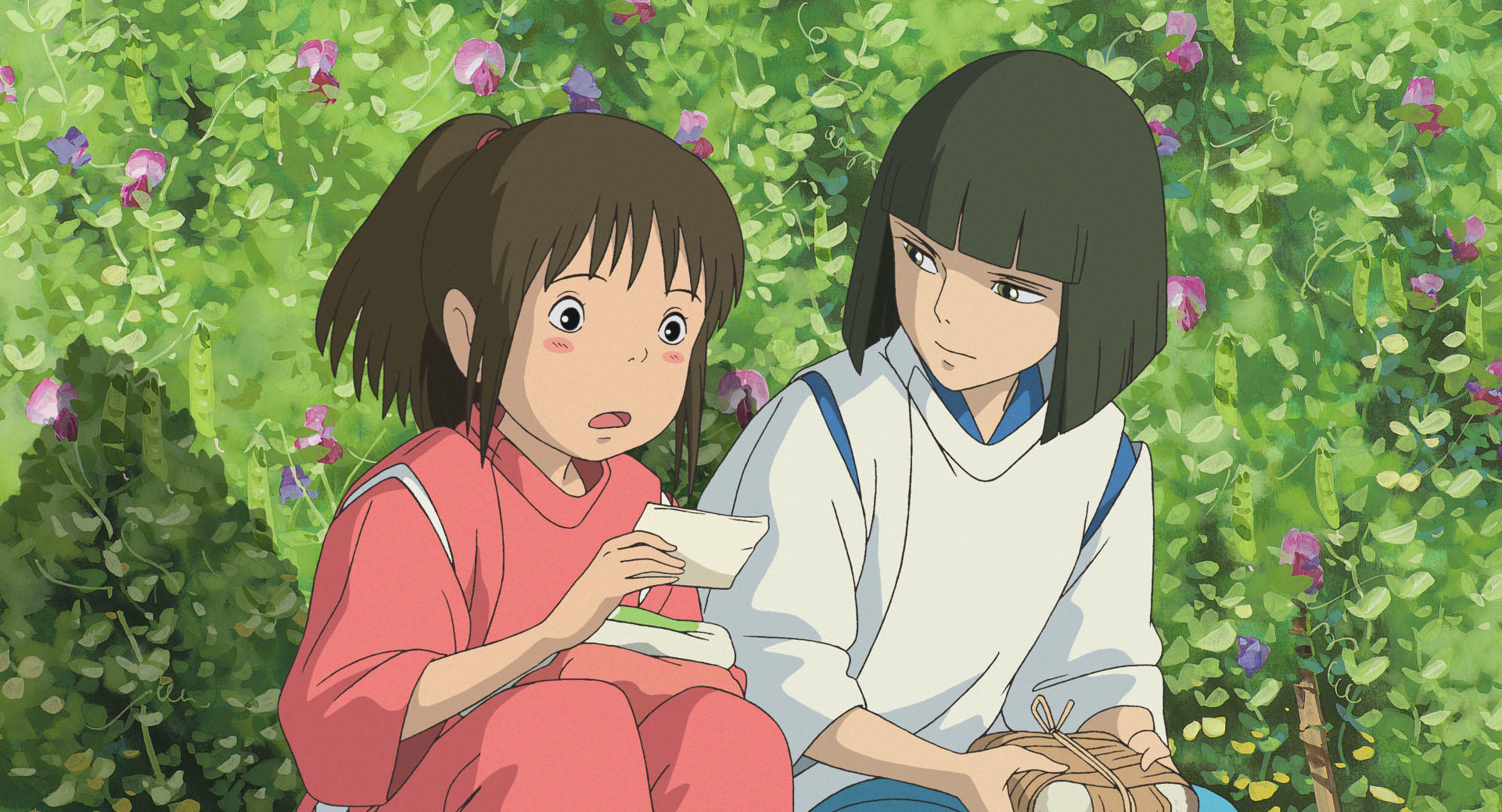
English localization
The English localization of Spirited Away was overseen by Pixar creative head John Lasseter and directed by Kirk Wise (Beauty and the Beast). The production prioritized capturing the nuance and humor of the original performances while adapting cultural references for Western viewers.
Chihiro and Haku
| Character & Description | Japanese Voice | English Voice |
|---|---|---|
| Chihiro Ogino / Sen<br>A ten-year-old girl who evolves from timid and spoiled to brave and compassionate | Rumi Hiiragi | Daveigh Chase |
| Haku / Nigihayami Kohakunushi<br>A river kami trapped as a dragon and acting as Yubaba's apprentice | Miyu Irino | Jason Marsden |
Bathhouse rulers and staff
| Character & Description | Japanese Voice | English Voice |
|---|---|---|
| Yubaba<br>The domineering, money-driven witch who owns and manages the bathhouse | Mari Natsuki | Suzanne Pleshette |
| Zeniba<br>Yubaba's identical twin sister, a humble and wise witch in Swamp Bottom | Mari Natsuki | Suzanne Pleshette |
| Kamaji<br>The tireless, multi-armed boiler master who prepares medicinal herb baths | Bunta Sugawara | David Ogden Stiers |
Supporting bathhouse characters
| Character & Description | Japanese Voice | English Voice |
|---|---|---|
| Lin<br>A practical, protective bathhouse worker who becomes Chihiro's older sister figure | Yumi Tamai | Susan Egan |
| No-Face (Kaonashi)<br>A shapeless, lonely spirit that reflects the behavior of whoever it encounters | Akio Nakamura | Bob Bergen |
| Boh<br>Yubaba's oversized, coddled baby, shielded from the outside world | Ryunosuke Kamiki | Tara Strong |
Chihiro's parents
| Character & Description | Japanese Voice | English Voice |
|---|---|---|
| Akio Ogino<br>Chihiro's overconfident, impulsive father | Takashi Naito | Michael Chiklis |
| Yuko Ogino<br>Chihiro's detached, practical mother | Yasuko Sawaguchi | Lauren Holly |
Core themes and symbolism explained
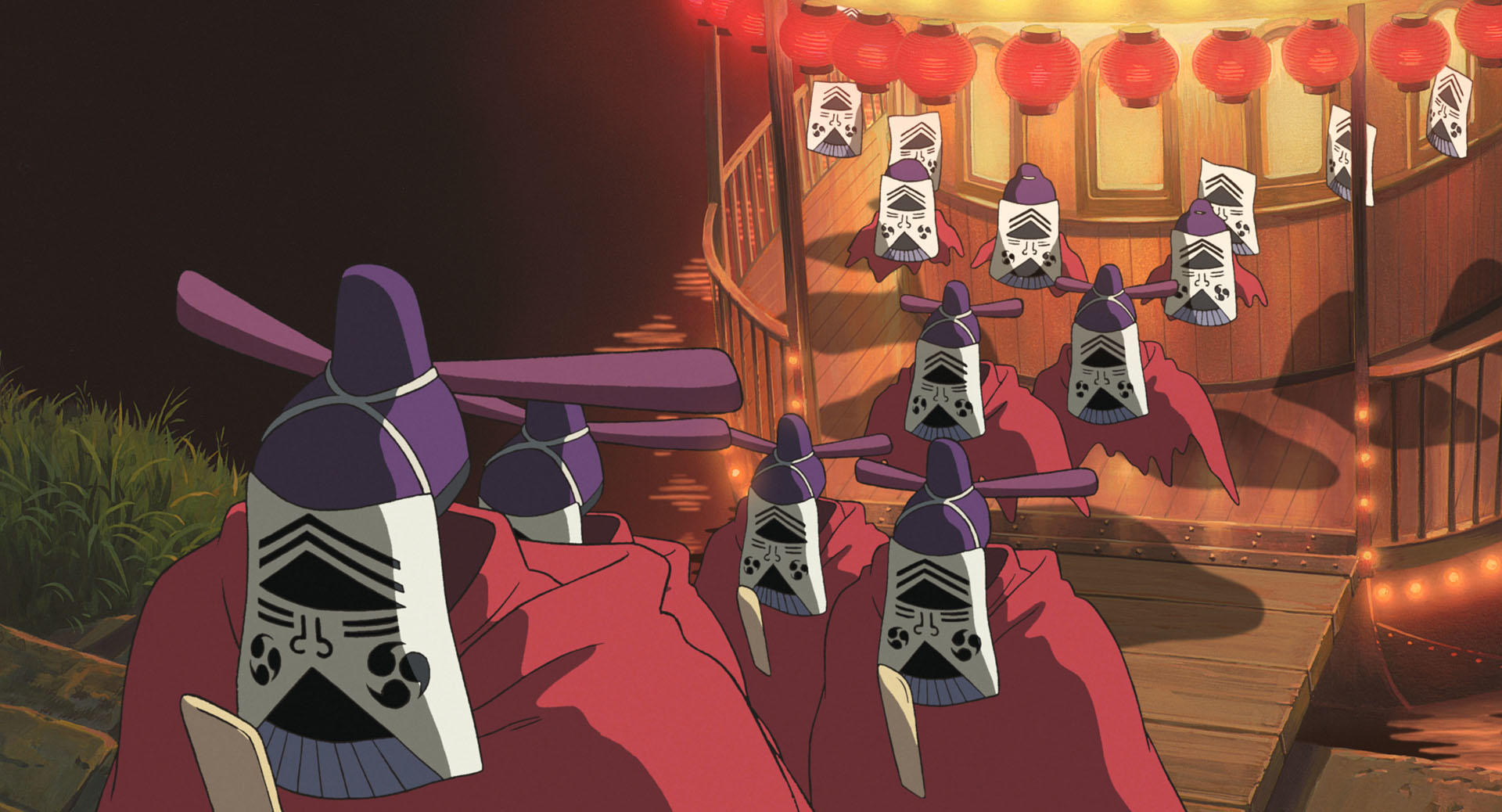
Meaning of kamikakushi
The title's Japanese term, kamikakushi (神隠し), translates literally to "hidden by kami" or "spirited away".
Folklore of spirit disappearances
In historical Japanese folklore, sudden disappearances, especially of children, were credited to spirits whisking them away into other worlds.
The Aburaya bathhouse sanctuary
The bathhouse, Aburaya, functions as a sanctuary where kami of mountains, rivers, and forests visit to cleanse themselves of the grime gathered from the human world.
The importance of names and personal identity
In Spirited Away, language and naming govern autonomy. When Yubaba steals the characters of Chihiro's name, leaving only "Sen" (千), she takes control of the girl's past and future.
Haku warns Chihiro never to forget her real name; he forgot his own long ago, which trapped him in Yubaba's service as an expendable pawn. Maintaining one's true identity is Chihiro's only safeguard against permanent subjugation.
Greed, gluttony, and the 1980s bubble economy
The setting of an abandoned theme park directly evokes Japan's economic bubble collapse of the early 1990s, when developers erected lavish leisure parks that were promptly deserted once speculative financing evaporated. Chihiro's parents epitomize this era's consumer hubris: they assume credit cards and cash give them instantaneous entitlement to feast on food meant for the gods without permission or reverence. The bathhouse staff fall victim to the exact same greed, scrambling blindly after No-Face's conjured gold nuggets until the spirit swallows several workers whole.
Environmental preservation and modern waste
The arrival of the "Stink Spirit" illustrates modern industrial contamination. The creature is actually a river deity buried under household trash, bicycles, and scrap metal.
Miyazaki based the scene on his experience helping clean local riverbeds in Japan, where volunteers hauled out discarded bicycles. The film demonstrates that human pollution harms both nature and the spiritual heritage tied to it.
Ending explained: the pig pen riddle and Haku's fate (major spoilers)
(Spoilers follow below.)
Trip to Swamp Bottom
After Haku is fatally cursed for stealing Zeniba's magical seal on Yubaba's orders, Chihiro travels by train to Swamp Bottom to return the seal and apologize in his place. Zeniba turns out to be kind and hospitable. She tells Chihiro to trust her own instincts, urging her to solve problems through practical sense instead of magic.
Haku's true name and freedom
When Haku arrives in his white dragon form to escort Chihiro back, she experiences a memory from early childhood: falling into a river while reaching for a dropped shoe, only for the water to buoy her up and carry her to safety. She recalls the river's forgotten name, the Kohaku River, and reveals Haku's true title: Nigihayami Kohakunushi.
Regaining his name shatters Yubaba's binding spell, freeing Haku forever. Although the mortal Kohaku River was paved over for apartment complexes, Haku now possesses his identity and vows to quit his apprenticeship.
Yubaba's final challenge
Upon returning to the bathhouse, Yubaba presents Chihiro with a final contractual challenge: pick her mother and father out of a pen holding a dozen identical pigs. Chihiro studies the herd carefully and states firmly that none of the pigs in the pen are her parents.
Solving the riddle through clarity
Her answer is entirely correct. Chihiro breaks Yubaba's contract through moral clarity and emotional maturity.
Her shifts at the bathhouse taught her to see past outward appearances. She spotted the pure river god beneath the stink spirit, the lonely child inside No-Face, and Haku inside the dragon. She instinctively recognizes that her parents' true spirits are not present in the trick pen.
The riverbed boundary
Haku accompanies Chihiro to the dry riverbed that marks the boundary of the spirit world, commanding her to walk toward the tunnel without looking back until she exits the other side. He reassures her that they will meet again.
Returning to the human world
Outside the tunnel, Chihiro finds her parents completely unharmed, unaware that any time has passed. However, their car is blanketed in thick dust and fallen leaves, proving days or weeks have elapsed.
As Chihiro climbs into the car, the purple hair tie spun by Zeniba, Boh, and No-Face catches the sunlight. Her parents remember nothing, but the shimmering hair tie remains in Chihiro's hair. The adventure was real. Her hard-earned confidence is hers for good.
FAQ
Why did Chihiro's parents turn into pigs in Spirited Away?
Chihiro's parents gorged themselves at an unattended food stall inside the spirit world without permission. Because the feast was set out for visiting spirits (kami), their entitled consumption triggered a supernatural curse that turned them into livestock.
Who is No-Face (Kaonashi) and what does he symbolize?
No-Face is an isolated spirit devoid of a set identity that mirrors the temperament of its surroundings. In the bathhouse, he absorbs the staff's greed and turns gluttonous, but in Zeniba's tranquil cottage, he becomes calm, polite, and content.
How did Chihiro know her parents were not among the pigs?
Chihiro learned to perceive people's true nature underneath exterior forms during her work at the bathhouse. When looking at the pen, her emotional connection and intuition let her see through Yubaba's trick, spotting immediately that none of the animals carried her parents' presence.
Will there ever be a Spirited Away 2?
No, Studio Ghibli and director Hayao Miyazaki have never planned a sequel. Miyazaki designs his feature films as complete, standalone narratives, making a follow-up movie extremely unlikely.