Studio Ghibli
Ponyo (崖の上のポニョ): Studio Ghibli Guide
Written and directed by Hayao Miyazaki, Studio Ghibli's 2008 fantasy film Ponyo (Gake no Ue no Ponyo) follows a magical goldfish befriending five-year-old Sosuke. The film debuted in Japan on July 19, 2008 and in US theaters on August 14, 2009.
Plot overview and inspirations
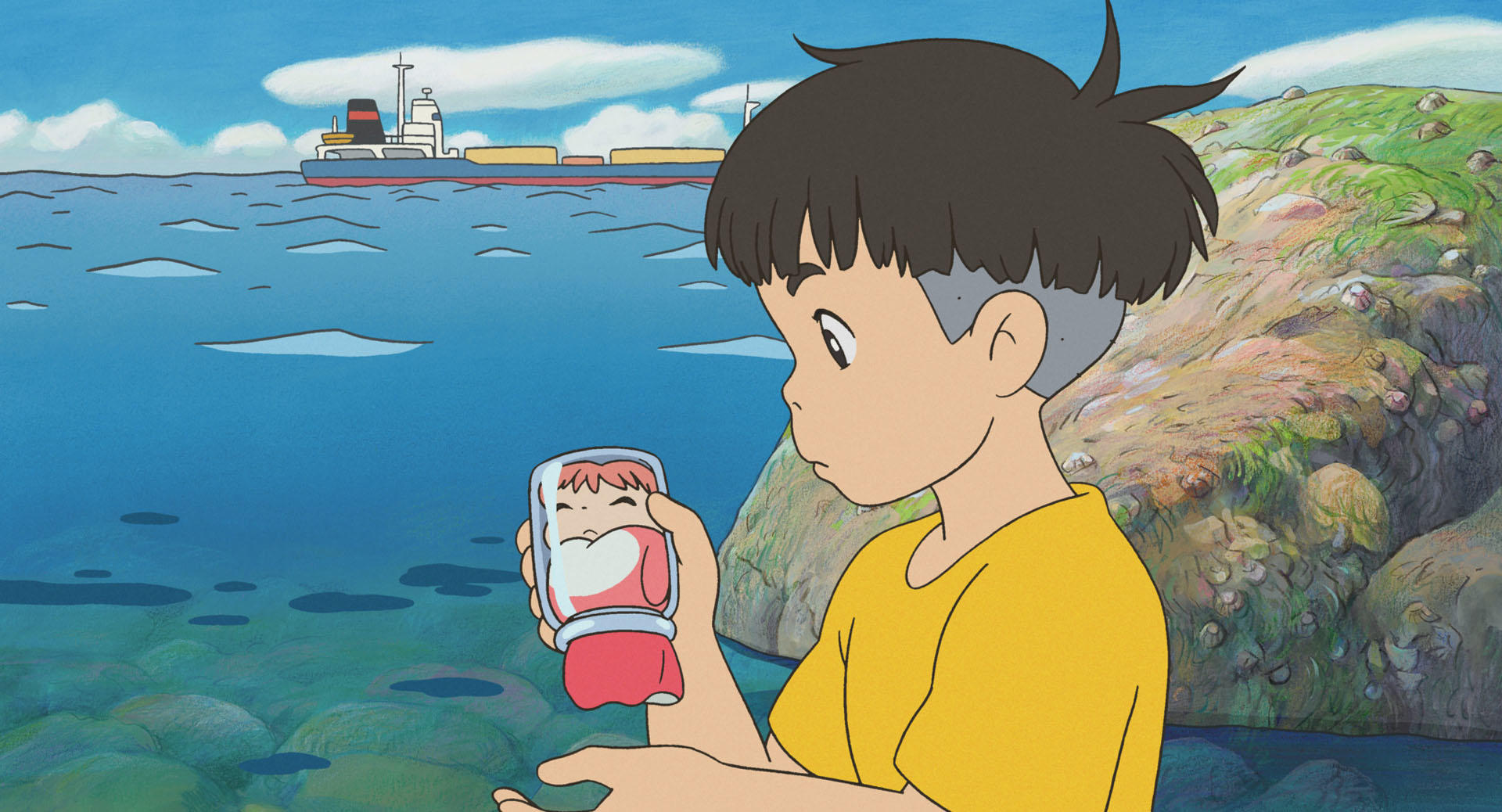
Five-year-old Sosuke lives with his mother, Lisa, in a house perched on a cliff overlooking an inland harbor town. One morning, Sosuke rescues a strange, red-faced goldfish trapped in a glass jar washed ashore. He names her Ponyo, feeds her ham, and promises to protect her.
Brunhilde's transformation and the tsunami
Ponyo is no ordinary fish. Her birth name is Brunhilde. She is the daughter of Fujimoto, a human who abandoned humanity to tend the ocean depths, and Granmamare, the divine goddess of the sea.
When Fujimoto forces Ponyo back underwater, her longing for Sosuke and her taste of human blood from a scratch on his finger allow her to magically transform into a human toddler. Ponyo breaks free and releases Fujimoto's stored reservoirs of ancient oceanic elixir. This disrupts the planet's ecological balance and unleashes a primeval tsunami that submerges Sosuke's town.
The Hans Christian Andersen connection
Miyazaki conceived Ponyo as a reimagining of Andersen's The Little Mermaid, but stripped away the 19th-century Christian notions of gaining an immortal soul through self-sacrifice. Instead, the narrative focuses on unconditional childhood devotion and primeval nature.
Character names also incorporate literary and mythological tributes: Brunhilde nods to the Valkyrie of Wagnerian opera, while Sosuke's name was taken directly from the protagonist of Natsume Soseki's 1910 novel Mon (The Gate).
Production: 170,000 hand-drawn frames and Tomonoura
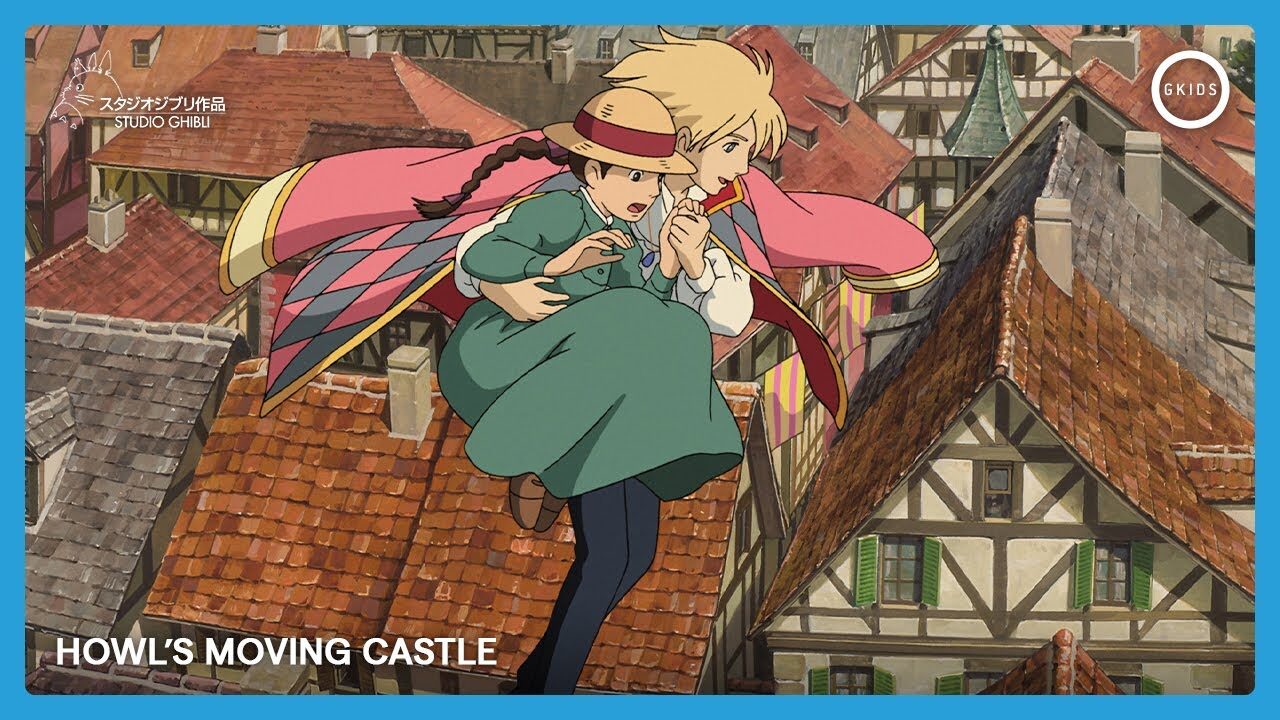
Following 2004's Howl's Moving Castle, Miyazaki felt contemporary animation was becoming overly sanitized by computer-generated imagery. For Ponyo, Studio Ghibli made the deliberate decision to abandon 3D CG entirely.
Pencil-first animation
Animation director Katsuya Kondo and art director Noboru Yoshida relied on soft, pastel-toned pencil strokes and watercolor textures reminiscent of children's picture books. Instead of simple background water, the animators drew waves as living, fish-like creatures that surge with primeval energy.
170,000 hand-drawn frames
The production completed 170,000 hand-drawn animation frames without the use of computer graphics. This was a massive volume of traditional animation for a 101-minute feature film.
The port of Tomonoura
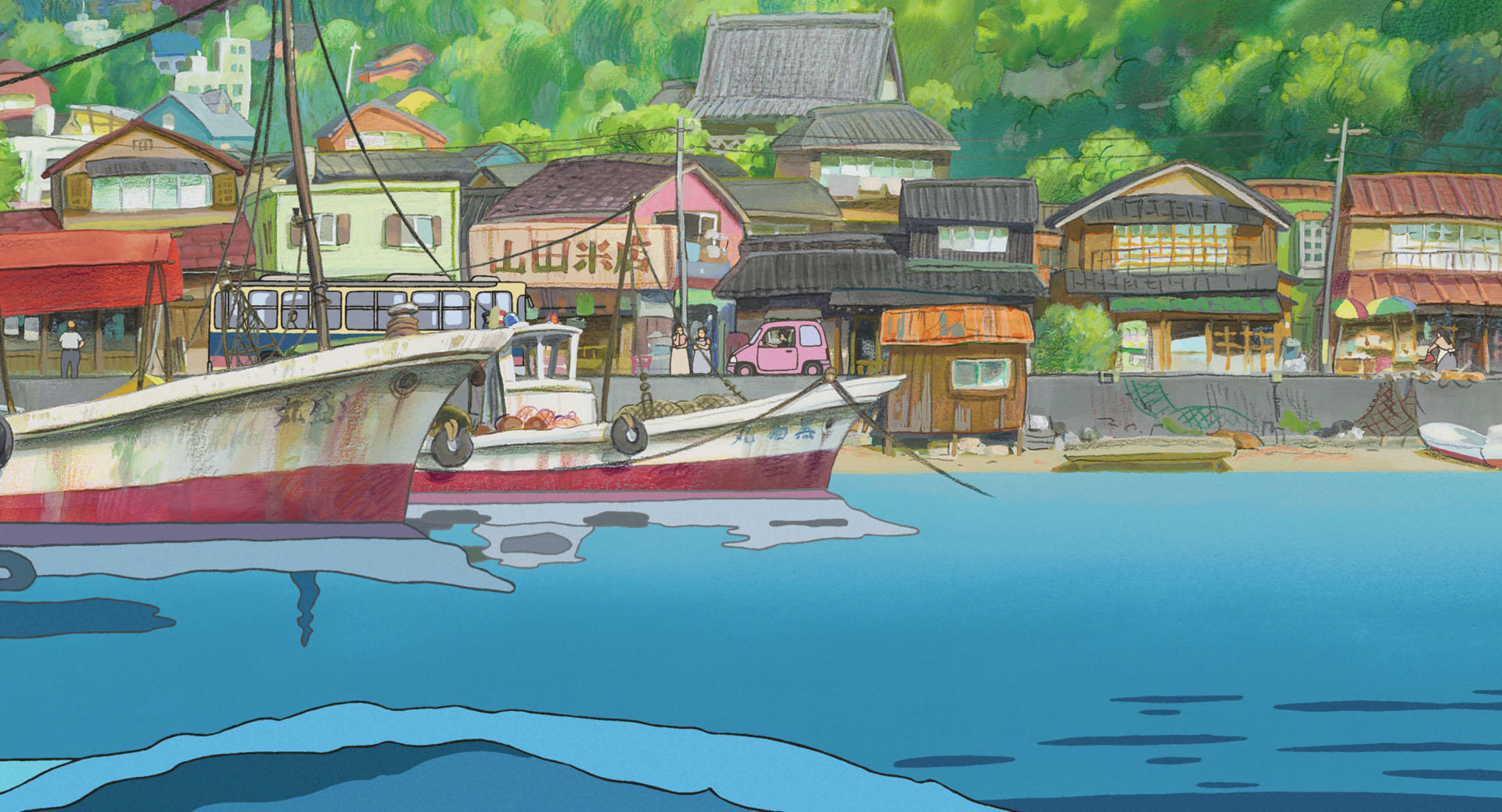
In spring 2005, Miyazaki spent roughly two months living in a home overlooking the historic port town of Tomonoura in Fukuyama, Hiroshima Prefecture. The town's narrow alleys, sweeping Seto Inland Sea vistas, and maritime atmosphere became the primary visual model for Sosuke's home and surrounding village.
Cast and voice actors: Japanese original vs. English dub
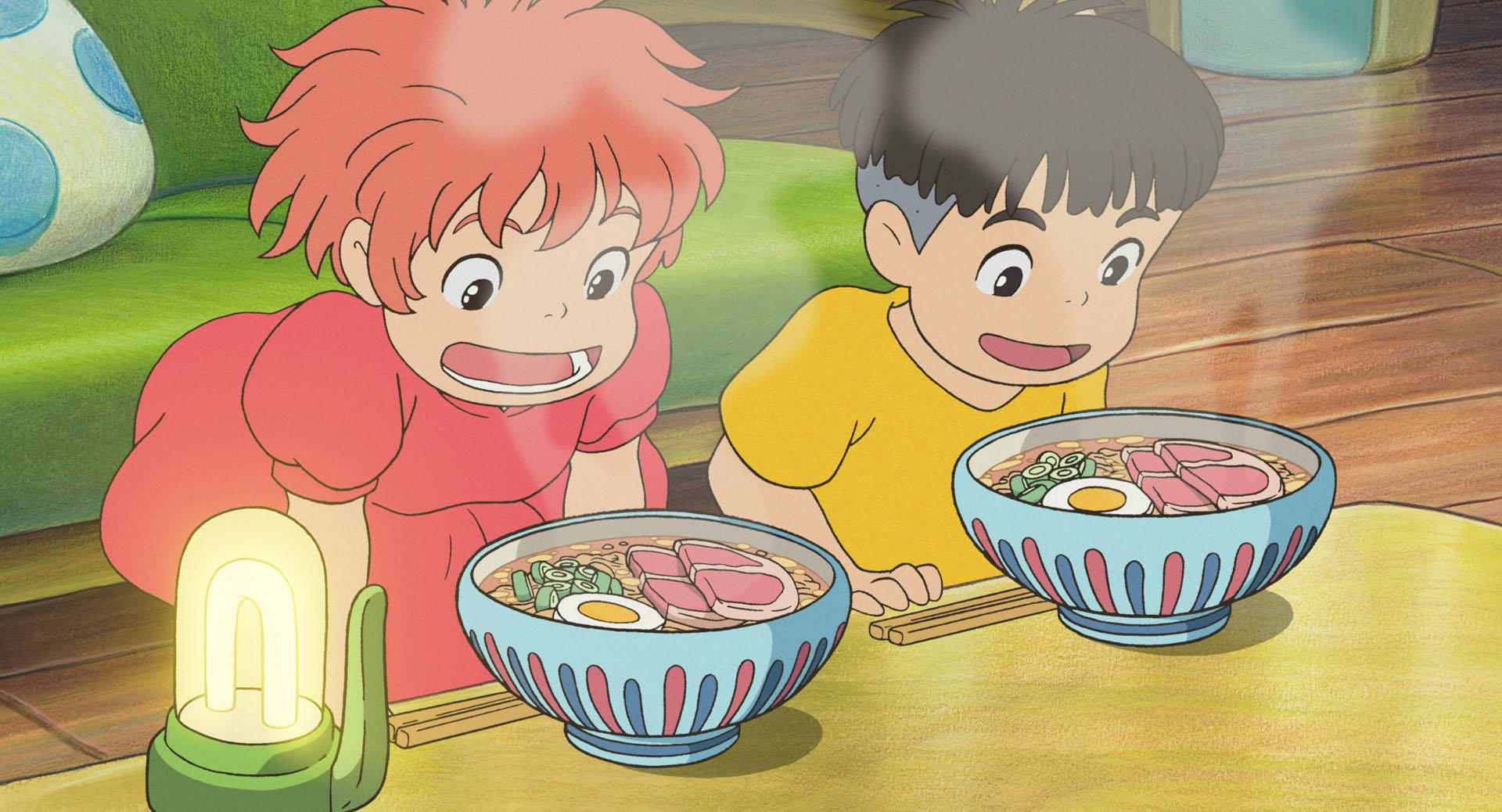
Main character: Ponyo
| Character | Japanese Voice Actor | English Dub Voice Actor |
|---|---|---|
| Ponyo (Brunhilde) | Yuria Nara | Noah Cyrus |
Main character: Sosuke
| Character | Japanese Voice Actor | English Dub Voice Actor |
|---|---|---|
| Sosuke | Hiroki Doi | Frankie Jonas |
Main characters: The parents
| Character | Japanese Voice Actor | English Dub Voice Actor |
|---|---|---|
| Lisa (Sosuke's mother) | Tomoko Yamaguchi | Tina Fey |
| Koichi (Sosuke's father) | Kazushige Nagashima | Matt Damon |
| Fujimoto (Ponyo's father) | George Tokoro | Liam Neeson |
Supporting cast
| Character | Japanese Voice Actor | English Dub Voice Actor |
|---|---|---|
| Granmamare (Sea Goddess) | Yuki Amami | Cate Blanchett |
| Toki (Elderly resident) | Kazuko Yoshiyuki | Lily Tomlin |
| Yoshie (Elderly resident) | Tomoko Naraoka | Betty White |
| Kayo (Elderly resident) | Tokie Hidari | Cloris Leachman |
Casting and character inspirations
Note on casting: In the Japanese production, George Tokoro voiced Fujimoto. Studio materials indicate that Fujimoto's perpetual exhaustion as a father was modeled directly on the demeanor of Ghibli animation director Katsuya Kondo, whose young daughter also served as the physical model for Ponyo.
Japanese fan reception and the 'afterlife' debate
In Japan, Ponyo achieved enormous commercial success, grossing ¥15.5 billion, drawing 12.87 million theatergoers, and reaching the ¥10 billion threshold in just 31 days.
The hit theme song
The theme song composed by Joe Hisaishi and performed by folk duo Fujioka Fujimaki alongside eight-year-old child singer Nozomi Ohashi became a national craze, earning a performance slot on NHK's 2008 Kohaku Uta Gassen.
The 'afterlife theory' (死後の世界説)
A popular fan theory holds that Ponyo carries eerie undertones in its second half. Japanese blog essays argue that the submerged village depicts a passage to the spirit world:
- Pristine submerged town: When Sosuke and Ponyo travel across the drowned village by toy boat, the submerged town is completely pristine, and ancient Devonian fish swim peacefully through the flooded trees.
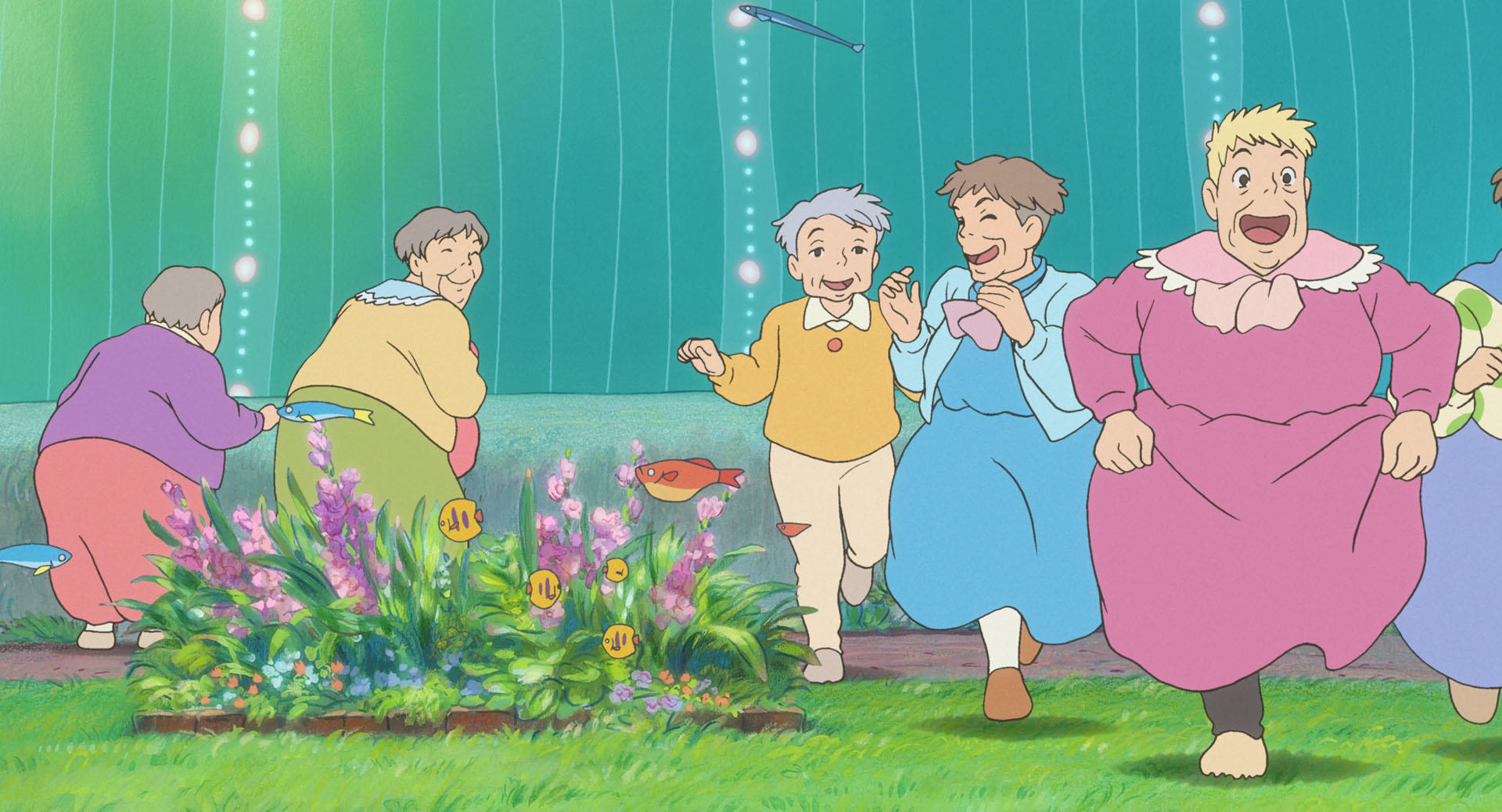
- The Himawari nursing home: The elderly grandmothers, previously wheelchair-bound, walk and run freely inside an air bubble beneath the sea, showing no shock at their submerged state.
Supernatural omens and rebuttal
- Maritime superstition: Koichi's crew encounters a procession of ghost-like historic vessels. They call it a "graveyard of ships" (fune no hakaba) and whisper that the gates to the other world have swung open.
- Granmamare as Bodhisattva: When the sea goddess glides past, sailors mistake her for Kannon, the Buddhist Bodhisattva of mercy and protector of sailors.
This afterlife interpretation remains common across Japanese online communities. In our view, the film simply presents the flooded town as an elemental, magical world experienced through the perspective of a five-year-old child.
Fujimoto's relatable exhaustion
Japanese movie blogs often describe Fujimoto as a comedic archetype of an overprotective, burnt-out modern father (ikuji-tsukare papa). In the film's conceptual background, Fujimoto was originally envisioned as an ordinary 19th-century human sailor aboard Captain Nemo's Nautilus from Jules Verne's Twenty Thousand Leagues Under the Sea before falling in love with Granmamare and choosing the sea.
Major spoilers: The final test and ending explained
The ancient covenant
In the film's climax, Ponyo's mother Granmamare meets with Sosuke's mother Lisa and devises an ancient ritual to restore cosmological balance. To prevent the moon from crashing to Earth and to stop the flooding, Sosuke must undergo a trial of unconditional acceptance.
The trial of unconditional acceptance
Granmamare asks five-year-old Sosuke if he will still love Ponyo even if she remains a fish, a bird-footed creature, or a human. Sosuke agrees without hesitation. He loves Ponyo in every form.
Granmamare then informs Ponyo that if she accepts becoming human, she must surrender her magical powers forever. Ponyo eagerly accepts.
The kiss and return of balance
With the pact sealed, Fujimoto entrusts Ponyo to Sosuke and asks him to care for his daughter. Ponyo leaps from the water, kisses Sosuke, and completes her permanent physical change into a human girl. The moon recedes to its natural orbit, the floodwaters withdraw safely from the coast, and the nursing home residents return to their everyday lives on land.
How to watch Ponyo in the United States
In the United States, official distribution and licensing for Studio Ghibli titles are handled by GKIDS.
- Subscription streaming: Ponyo streams in the US on Max (Warner Bros. Discovery). It includes both the Japanese audio track with English subtitles and the Disney/GKIDS English dub.
- Digital purchase and rental: Available on major video-on-demand storefronts including Apple TV, Amazon Prime Video, Fandango at Home, and Google Play.
- Physical media: GKIDS and Shout! Factory distribute official Blu-ray, DVD, and Collector's Edition steelbook releases across major US retailers.
FAQ
What kind of creature is Ponyo?
Ponyo begins as a magical fish-girl with a human-like face, named Brunhilde. She is the magical offspring of an ex-human wizard named Fujimoto and the ocean goddess Granmamare.
Why does Ponyo crave ham?
Ham is the first human food Sosuke feeds her when she is trapped in the jar. Her obsession with ham represents her desire to consume human food and embrace life on land.
Did everyone drown in the flood during Ponyo?
A fan theory claims the town entered the afterlife. In the film itself, the flood is a magical, temporary event that recedes safely once cosmological balance is restored.
Sources
Official sites & news
- ghibli-museum.jp Japanese
- cinemagene.com Japanese
- eiga.com Japanese
- wikipedia.org Japanese
Blogs & fan discussion
- note.com Japanese
- ameblo.jp Japanese
- hatenablog.com Japanese
- sifrinsight.com Japanese
- jpn.org Japanese
- ascii.jp Japanese
- ofutei.com Japanese
- tomo-iroha.jp Japanese
- stormtopics.com Japanese
- ghibli.me Japanese
- reddit.com
Statements backed only by blogs or fan discussion are written as what fans say, not as fact.