Studio Ghibli
Kiki from Kiki's Delivery Service: Studio Ghibli Witch Guide
Kiki is a 13-year-old witch-in-training created by Eiko Kadono and animated by Studio Ghibli. In Hayao Miyazaki's 1989 film Kiki's Delivery Service, she moves to Koriko with her cat Jiji to run a courier service.
Who is Kiki the witch?
Witch heritage and tradition
Kiki is the title character of Hayao Miyazaki's 1989 film Kiki's Delivery Service, based on the 1985 children's novel by Eiko Kadono.
She is born to an ordinary human father named Okino, a folklore scholar, and a witch mother named Kokiri, who prepares herbal remedies. Tradition dictates that young witches leave home on a full moon night upon turning 13 to live for one year in a town with no other resident witch.
Moving to Koriko
Kiki settles in the port town of Koriko alongside her talking black cat, Jiji.
She takes up residence in the attic of the Gutiokipanja bakery, owned by a baker named Osono and her husband Fukuo, and sets up her courier company, the Witch Delivery Service.
Appearance and personality
Visual design
Kiki is a slender 13-year-old girl with short dark brown hair, rosy cheeks, and large dark navy blue eyes. She ties a wide red fabric ribbon across the top of her head. Her standard outfit is a dark indigo three-quarter sleeve dress worn over white bloomers and a camisole, finished with terracotta orange flats.
Character traits
Kiki is curious, warm, and determined, yet she can be stubborn and proud. In an interview published in The Ghibli Textbook: Kiki's Delivery Service, Miyazaki remarked that Kiki acts like a child around her parents while keeping serious thoughts to herself. Miyazaki also noted that she can be blunt toward boys her age but remains polite to elders she admires.
Kiki's flying powers and magic
Broomstick flight
Kiki's primary magical ability is flying on a broomstick. Unlike her mother Kokiri, Kiki never mastered potion brewing or charms. Before departing home, Kokiri hands Kiki her own large, worn flying broom. Although Kiki initially complains that it is too big, her mother assures her that the broom guided her safely and will do the same for Kiki.
Why Kiki loses her flying power
During her stay in Koriko, Kiki falls into an emotional slump. She gets caught in a thunderstorm delivering a herring and pumpkin potpie, catches a fever, and feels alienated by the wealthy peer group around her friend Tombo. Soon after, she finds she cannot fly, breaks her broom, and can no longer converse with Jiji.
Magic as innate talent
In the original Japanese version, Kiki explains that witches fly with their blood, while the English dub renders this as spirit. In The Ghibli Textbook: Kiki's Delivery Service, Miyazaki explained that blood refers to an innate talent rather than a consciously learned skill. Ursula, a wilderness painter Kiki befriends, identifies her loss of flight as an artist's block, advising her to rest and find a new purpose.
Reclaiming her magic
Kiki recovers her flying ability during a public crisis. An airship called The Spirit of Freedom breaks loose during a gale, leaving Tombo suspended from a mooring line above the plaza. Kiki grabs a street sweeper's push-broom, channels her concentration, and takes to the sky to save him. Although she regains her flight, she remains unable to talk to Jiji. Miyazaki stated that Jiji reflects Kiki's immature side, and her inability to speak with him reflects her step into maturity.
Kiki voice cast across dubs
Three primary voice casts have portrayed Kiki across Japanese releases and English localizations.
| Language / Version | Kiki Voice Actor | Notes |
|---|---|---|
| Japanese (1989) | Minami Takayama | Theatrical original |
| English (Streamline, 1989) | Lisa Michelson | Japan Airlines flight dub |
| English (Disney, 1997) | Kirsten Dunst | Theatrical and home release |
Cast trivia and dub changes
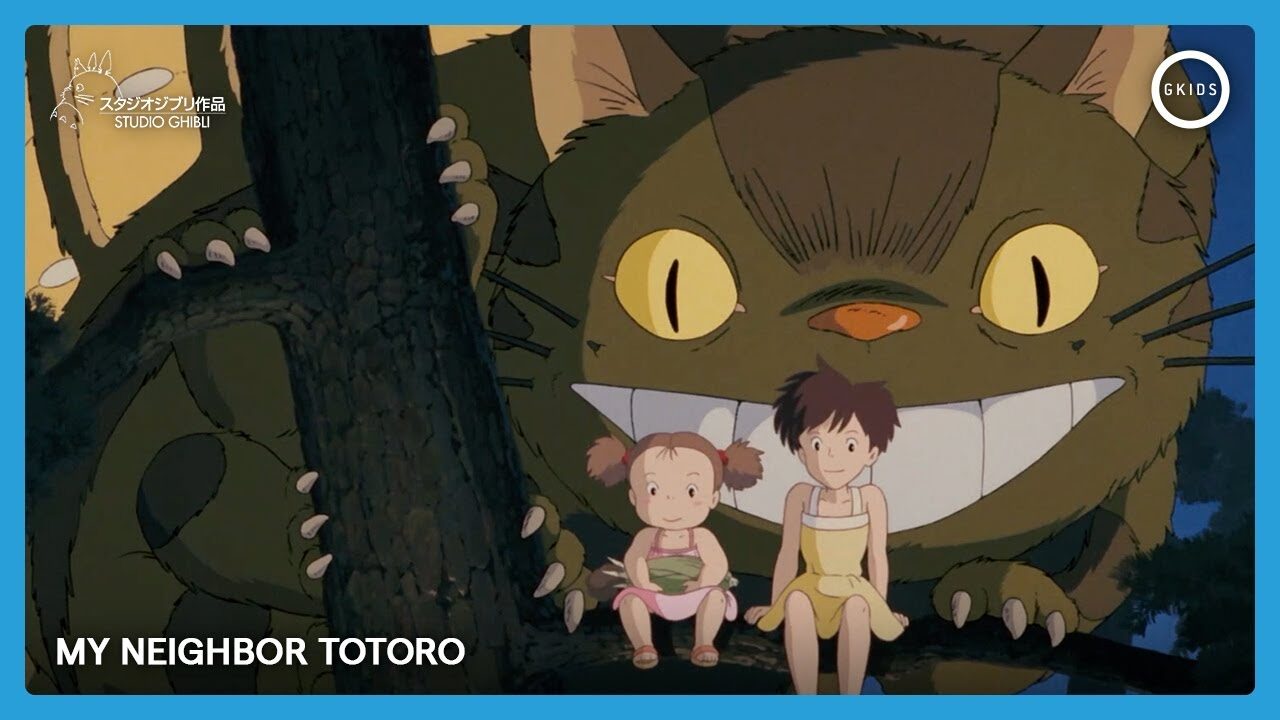
Minami Takayama also provided the voice for the painter Ursula in the Japanese version. Lisa Michelson previously voiced Satsuki Kusakabe in Streamline's English dub of My Neighbor Totoro.
The Disney dub with Kirsten Dunst was adjusted in 2010 to remove extraneous spoken lines, bringing it closer to the original Japanese dialogue.
Film adaptation versus the original novel
Eiko Kadono's book
Kadono published the original children's novel on January 25, 1985, through Fukuinkan Shoten. The novel is structured episodic fashion across eleven chapters. Kiki encounters lighthearted local mishaps, such as delivering a large knitted belly warmer to an offshore ship, rescuing a child at the beach, and retrieving her broom after a flying fan takes it. She faces no severe trauma or loss of flight.
Studio Ghibli's changes
Miyazaki revised the script draft written by Nobuyuki Isshiki, introducing harsher setbacks to explore adolescent loneliness. The crow assault, Kiki losing her witch magic, and the climactic airship accident do not appear in Kadono's book. Kadono was displeased with these changes during pre-production, almost causing the project to halt until Miyazaki and producer Toshio Suzuki visited her home and hosted her at Studio Ghibli.
Kadono later penned eight more books between 1985 and 2022. In the extended novel series, Kiki grows into adulthood, marries Tombo, and raises twins named Nini and Toto.
Production background and design origins
Directorial changes
Group Fudosha initiated the project in 1987, seeking an adaptation directed by either Miyazaki or Isao Takahata. Because both directors were busy finishing My Neighbor Totoro and Grave of the Fireflies, Sunao Katabuchi was initially chosen to direct.
Miyazaki later assumed full directing duties after heavily modifying the script, expanding the project from a planned 60-minute feature into a 102-minute film.
Character and setting design
Character designer Katsuya Kondo initially drew Kiki with long hair tied by ribbons, matching Akiko Hayashi's book illustrations. Kondo and Miyazaki shortened her hair to simplify the animation workload while adding a red bow to retain her youthful appearance.
Koriko's seaside architecture drew from photographs Miyazaki captured during a trip to Stockholm and Visby, Sweden, with supplementary influences from Paris, Amsterdam, and San Francisco.
Major story spoilers: Kiki's ending
In the film's climax, Kiki successfully catches Tombo as he slips from the dangling airship mooring cable, landing safely before a cheering crowd. Jiji leaps onto her shoulder, though their verbal communication does not return.
Kiki establishes herself as a town hero and officially integrates into the community. She joins the local aviation club and sends a letter home to her parents, writing that while living away has been difficult at times, she loves Koriko and is confident in her work.
FAQ
Why does Kiki lose her powers in Kiki's Delivery Service?
Kiki loses her magical flight due to deep self-doubt and emotional exhaustion. In the film, Ursula frames this loss as a temporary block that requires rest and discovering personal motivation.
Can Kiki talk to Jiji at the end of the movie?
No, Kiki does not regain the ability to converse with Jiji in the Japanese original. Hayao Miyazaki stated that Jiji represented her childhood self, and losing the voice shows she has matured.
Who does Kiki end up with in the original books?
In Eiko Kadono's multi-volume novel series, Kiki maintains a relationship with Tombo, marries him as an adult, and has twins named Nini and Toto.
Sources
Official sites & news
Blogs & fan discussion
- Official trailer (YouTube) Japanese
- Kiki - Ghibli Wiki
- Kiki's Delivery Service - Ghibli Wiki
- Kiki's Delivery Service (Novel) - Ghibli Wiki
Statements backed only by blogs or fan discussion are written as what fans say, not as fact.